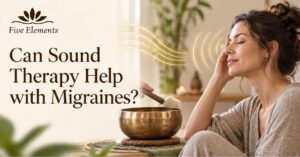
There was one client, a man in his forties, who owned his own logistics business, who told me he’d tried everything for his stress. Therapy. Medication. A gym membership he never used. An app that pinged reminders to breathe. Nothing adhered. His wife had insisted he attend a sound session. He sat down, expecting to feel silly. About twenty minutes into the bowls, his shoulders sagged so noticeably that the person next to him noticed before he did. The Heart Bowl was part of the sound experience, creating a gentle, resonant tone that helped support the calming atmosphere.
That’s often where the skepticism begins to fall apart. Not from a lecture on chakras but from the body doing something the mind didn’t plan for.
So let’s actually answer the question: Are Tibetan singing bowls effective against stress, or is it mere ritual and placebo? This is what I have found to be the case in practice and what research actually says.
What Happens in Your Body During a Singing Bowl Session
This is why the bowls work on you even before you’ve decided whether to believe in them. When you strike or rub a singing bowl, it produces a tone that is layered with lower harmonic frequencies—the kind you feel as well as hear. And your body responds to that vibration the same way it would respond to any strong, steady, predictable input: it starts looking for a pattern to match that vibration to.
This is important because your stress response is a creature of unpredictability. Racing mind. Tight chest. Jaw you didn’t know you were clenching. Your nervous system is on alert for the next unknown thing. A singing bowl instead gives it something steady and known to lock onto. That’s the start of the transition from a sympathetic “on guard” state to a parasympathetic “rest and digest” one.
What the Research Actually Shows
I don’t like making claims I can’t back up, so let’s look at the studies directly.
A widely cited 2016 study by researcher Tamara Goldsby and colleagues followed 62 participants through a singing bowl meditation session. The results showed statistically significant drops in tension, anger, fatigue, and depressed mood after the session, along with a rise in reported spiritual well-being. People who had never tried this kind of meditation before had even bigger drops in tension than the experienced participants, which tells you something: you don’t need years of practice to get a real response.
A more recent randomized controlled trial, published during the period of heightened pandemic-era anxiety, compared Tibetan singing bowl sound against progressive muscle relaxation and a control group with no intervention. Using EEG and heart rate variability tracking, researchers found the singing bowl group showed measurable increases in heart rate variability, a marker closely tied to a calmer, more regulated nervous system, along with changes in brain wave activity linked to relaxed states.
Separate research out of Slovenia followed 129 participants across sound sessions that included singing bowls and gongs. Nearly everyone in the group described the experience as relaxing or healing, and many reported better sleep and a sense of renewed motivation in the days after.
None of this is a cure. The sample sizes in most of these studies are still small, and researchers are honest about needing more long-term data. But the direction of the evidence is consistent. Singing bowls show up again and again as a low-cost, low-risk way to bring measurable calm to a stressed body.
Why It Works Even If You’re Skeptical
This is the part that clients find most reassuring. You don’t need to subscribe to any belief system for this to work. A 2022 study pointed out something interesting: those who were completely new to singing bowl meditation had a greater reduction in tension than those who had practiced it for years. This is the opposite of what you would expect if this were purely a matter of faith or expectation.
What seems to matter more is the body’s exposure to sustained resonant sound in a quiet space, away from screens and notifications. Your nervous system does not need to understand what is going on to respond to it. It just needs a chance to take a break from looking for threats.
What a Real Session Looks Like
If you’ve never tried this, here’s roughly what to expect, whether you’re doing it yourself with a bowl at home or joining a guided session.
- You sit or lie down in a comfortable position, usually with eyes closed.
- A practitioner strikes or circles the mallet around the bowl’s rim, producing a sustained tone.
- The sound builds, layers, and sometimes multiple bowls play at different pitches.
- Your breathing naturally slows to match the pace of the sound.
- The session closes with a period of silence, giving your body time to settle before you get up.
Most sessions run 30 to 60 minutes, though even a short 10 minute practice with a single bowl at home can start to shift how tense your body feels.
Where Singing Bowls Fit Into a Bigger Picture
Let me be frank with you here. If you are dealing with clinical anxiety or depression, a singing bowl is not going to replace therapy. “This won’t help a job that’s burning you out or a relationship that needs a real conversation. If nothing else, it does a nice job of giving your body a dependable off-ramp from a stress state. It is something you can go back to again and again with no side effects and no cost after the initial purchase.
That’s the approach Five Elements takes with the people who go thru their sound healing programs: combining singing bowls and other instruments with breathwork and behavioral tools, instead of considering sound as a standalone fix. If you want to try this out for yourself, rather than reading about it, their sessions are designed around just this sort of guided, in-person exposure.
A Few Honest Limits
- Research is still developing. Most studies involve small groups and short sessions, so we don’t yet have strong data on long-term effects.
- Results vary by person. Some people feel an immediate shift. Others need a few sessions before their body starts to respond.
- It’s a support tool, not a diagnosis or treatment for a clinical condition. Talk to a doctor or therapist if your stress is affecting your daily functioning.
The Bottom Line
Do Tibetan singing bowls work for stress? The honest answer is yes, with real, measurable effects on heart rate variability, tension, and mood shown across multiple studies, though the research base is still growing. You don’t need to believe in energy fields or chakras for your nervous system to respond to a steady, resonant sound. You just need to sit still long enough to let it.
FAQs
Do Tibetan singing bowls actually reduce stress, or is it just relaxation from sitting still?
Studies using EEG and heart rate variability tracking show changes specific to the sound itself, not just quiet sitting. Control groups without sound show smaller shifts, suggesting the vibration plays a direct role.
How long does it take to feel calmer during a singing bowl session?
Many people notice a shift within 10 to 20 minutes. Research sessions typically run 30 to 60 minutes for the most consistent results, though shorter home sessions can still help.
Can I use a singing bowl by myself, or do I need a practitioner?
You can absolutely use one alone at home. A practitioner adds guidance and layered instruments, but a single bowl and a quiet room is enough to start.
Are singing bowls safe for anxiety or should I be cautious?
For most people, yes. They’re non-invasive and low-risk. If you have a diagnosed anxiety disorder, use them alongside professional care rather than as a replacement.
What’s the difference between a Tibetan bowl and a crystal singing bowl for stress relief?
Tibetan bowls are metal alloy with a warm, layered tone. Crystal bowls are quartz with a clearer, more piercing note. Both show similar stress-relief effects in research; the choice often comes down to personal preference.