Sound bath healing is fast becoming something of a phenomenon in the wellness industry and for good reason. Few other modalities offer the deeply relaxing, totally enveloping, and completely non-invasive experience that the wash of crystal bowls, Tibetan gongs, and tuning forks can provide. But if you have epilepsy, dropping into a sound healing session may come with some real and valid concerns. Is it safe? Will the vibrations cause me to have a seizure? Are there any precautions I should take?
If you have epilepsy, or care for someone who does, this guide is for you. We’ll cut through the ambiguity and Fearlessly onto some straight answers backed by science and experience.
What is Sound Bath Healing and Why are People Turning to It?
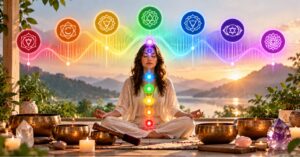
A sound bath involves no water. Rather, it is a guided meditation where one lies down (on a yoga mat or blanket) and listens to a trained practitioner play different instruments that produce layers of frequencies and vibrations. Think of the sounds washing over you. That’s where sound bath gets its name.
Crystal singing bowls, Tibetan bowls, gongs, tuning forks, chimes, and even the voice are some of the most common instruments used for sound bath healing. Each vibrates at its own unique frequency range that many claim interacts with the body’s own bioelectric field to allow your brainwave state to shift from high functioning beta waves into lower alpha, theta, and even delta waves (similar to what your brain experiences when you’re deeply meditating and sleeping).
Individuals visit sound bath healers for many reasons, like stress and anxiety relief, chronic pain management, better sleep, and to process emotions. In recent years, sound healing workshops have become popular to anyone looking to get their certification as a sound bath healer.
Understanding Epilepsy Before Entering a Sound Healing Space
“Epilepsy” is a blanket term for a group of conditions caused by abnormal electrical activity in the brain that causes seizures. There are many types of epilepsy because it can affect people in different areas of the brain, cause different types of seizures, and be affected by different triggers.
Because of this, epilepsy triggers are different for every individual. Some of the most common triggers for epileptic seizures are lack of sleep, stress, photosensitive epilepsy, hormones, alcohol, and medications. That being said, just because one person may have epilepsy does not mean they share the same triggers as another person with epilepsy. For this reason, I cannot give a simple yes or no answer to this question.
Can Sound Bath Healing Trigger a Seizure?
Let’s tackle the question most people really want answered and it’s a complicated one that deserves a nuanced reply.
Musicogenic epilepsy is an extremely rare type of reflex epilepsy where seizures are provoked by specific sounds or musical sequences. It represents only a tiny fraction of epilepsy cases. If you have musicogenic epilepsy, specific tones or rhythms or maybe even whole songs, can set off a seizure. But for most people with epilepsy, sound is not a known trigger.
However, there are a few things about a sound bath to consider if you have a seizure disorder:
- Very loud, low-frequency gong sounds may feel physically intense and overwhelming for some individuals.
- Hyperventilation-like breathing exercises sometimes included in sound sessions may lower the seizure threshold in certain epilepsy types.
- The deeply altered states of consciousness some people experience during a sound bath can be disorienting, especially if a person is prone to absence seizures or focal aware seizures.
- Lying down in a group setting with eyes closed removes the person’s usual environmental awareness, which may be a concern for safety if a seizure were to occur.
None of these factors make sound baths universally off-limits. They simply highlight why individual consultation is essential.
A sound bath could cause headaches for some practitioners both epileptic and non epileptic — if performed with instruments that are uncomfortably loud at close range, or if performed in a room with bad acoustics that produce jarring standing waves. This concern is largely due to volume and frequency intensity rather than safety itself.
What Neuroscience Says About Sound and the Brain
Science has not shown large groups of people with epilepsy undergoing sound healing and kept track of their seizures to see what happens. However, there is some science to share about sound healing in general. Research is preliminary but a few things have been found. When listening to binaural beats (one type of sound experience), brainwave activity can be measured and is changed in response to the tones. Some binaural beat frequencies have even been shown to increase relaxation and decrease anxiety producing brainwave activity.
Relaxation and decreased stress are, objectively speaking, good things to strive for if you have epilepsy. Stress is the number one trigger for seizures no matter what type of epilepsy a person has. So if a sound bath actually decreases your stress and increases parasympathetic nervous system activity (as many people who offer them claim, and many people who take them swear by), then sound healing could actually benefit you and your seizure disorder…if used cautiously.
Steps for Participating Safely if You Have Epilepsy
The following steps are recommended for anyone with epilepsy who is interested in exploring sound bath healing as part of their wellness routine:
- Consult your neurologist first. Share your interest in sound baths and ask specifically whether your seizure type or current medications present any known concerns.
- Identify your personal triggers. If you know your seizures are triggered by specific sounds or music, a detailed conversation with your doctor is essential before proceeding.
- Choose a practitioner who is knowledgeable and communicative. A qualified practitioner will ask about your health history before the session and will know how to modify the experience if needed.
- Bring a trusted companion to the session who is aware of your epilepsy and knows how to respond if needed.
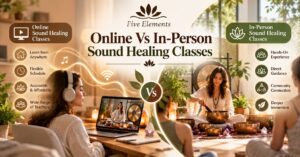
- Start with a shorter or one-on-one session rather than a large group event, so the practitioner can attend more closely to your experience.
Can People with Epilepsy Train as Practitioners?
Lots of people drawn to sound healing courses have lived experience of neurological or chronic health conditions. The desire to heal often leads you to sound healing in the first place. Becoming a practitioner – offering other people what has helped you – is an empowering thought.
Of course people with well-managed epilepsy can and do complete sound healing courses, and go on to work as qualified practitioners. Courses will usually involve lots of hands-on instrument playing, learning theory around ac watts and how they affect the body and mind, and giving sessions. The same things to consider around taking part apply to courses – avoiding known triggers, taking extra care with energy levels and sleep if you’re doing intensive training, and being open with your teachers.
A good course won’t turn away someone with epilepsy, they will work with you to make sure your training is safe.
How Five Elements Approaches Sound Healing with Care and Expertise
What sets Five Elements apart when choosing to attend with certain health concerns is that we customize each session for your individual constitution and health history. We believe healing through sound should not be a generalized group experience. If you have epilepsy or any sensitivity in the nervous system, attending a sound bath that is customized to YOU, not the other participants, can be the difference between life-changing and life-threatening.
Booking your first sound bath as a person with epilepsy or enquiring about sound healing courses to better assist your clients can begin with contacting a team that takes your health history into consideration.
What to Tell Your Sound Bath Practitioner
Open communication with your practitioner is non-negotiable. Before your session, share the following information:
- That you have epilepsy and what type (if known).
- Your known personal seizure triggers.
- Whether your seizures are currently well-controlled with medication.
- What to do if a seizure occurs during the session.
- Whether you prefer a seat to lying flat on the floor, in case you feel the need to move quickly.
A practitioner who is knowledgeable and ethical will welcome this conversation and may modify the session accordingly reducing volume, selecting gentler instruments, or ensuring you are positioned near the exit.
Final Thoughts: Listening to Your Own Body
Living with epilepsy doesn’t mean you can’t have access to the healing modalities the rest of the world is diving into. It just means you approach them with a little more intentionality and that intentionality, once honoured, can actually deepen your experience.
Sound bath healing, at its best, is an exercise in deep listening, to the sound healing instruments around you, to the space you’re in, and to yourself. If you have epilepsy, that sort of tuned-in self-listening is already second nature. You know how to listen to your body’s cues. That mind-set is one of the best tools you can bring with you into a sound healing session.
Prepare. Communicate. Seek out responsible, experienced practitioners. And allow yourself to enjoy your own well-being, on your own terms.
Frequently Asked Questions
- Is sound bath healing safe for everyone with epilepsy?
Not universally. Safety depends on your specific epilepsy type, your known triggers, current seizure control, and how a session is structured. Always consult your neurologist before participating and communicate your health history with the practitioner.
- Can a sound bath cause headaches in people with epilepsy?
A sound bath can cause headaches in anyone who is sound-sensitive or who experiences sessions with very loud instruments. People with epilepsy may be more sensitive. Choosing gentler, softer sessions and sitting farther from instruments significantly reduces this risk.
- What is musicogenic epilepsy and does it affect sound bath participation?
Musicogenic epilepsy is a rare type of reflex epilepsy where seizures are triggered by specific music or sounds. People with this condition should exercise extreme caution and seek specialist advice before any sound-based therapy. However, it affects a very small number of people with epilepsy.
- Can someone with epilepsy enrol in sound healing courses?
Yes, in most cases. People with well-controlled epilepsy can pursue sound healing courses successfully. It is important to be honest with course trainers, manage sleep and stress carefully around training schedules, and monitor how extended instrument practice affects your nervous system.
- What instruments are generally gentler for people with neurological sensitivities?
Crystal singing bowls played at moderate volume, tuning forks, monochords, chimes, and ocean drums are generally considered gentler options. Large gongs played at high volume or sharp percussive sounds may be more challenging for those with neurological sensitivities and should be approached with caution.