Introduction: Why Sound Frequencies Matter for Your Health
Centuries before doctors were prescribing medications and solutions, ancient healers were using rhythmic sound, chanting, and tonal instruments as a means to bring balance back to the body. Vibrations from Tibetan singing bowls ringing through Himalayan temples to Native American chanting circles have long recognized the medicinal properties of sound.
Fast-forward to today and we are now better understanding how ancient practices can be applied in our modern world. Scientists, health coaches, and brain researchers are all studying how certain frequencies can affect our brainwaves, heart rate, hormones, and even cells. We know sound can impact the body, but what frequencies are the most effective for healing? And how can we intentionally apply them?
If you’ve been curious about sound healing, science behind it, and how to use sound frequencies for physical and emotional healing-this is the ultimate guide to sound frequencies for your wellness toolbox.
How Sound Frequency Healing Works for Body
Before we get into details on various frequencies. Let’s first learn this foundational lesson: Everything that exists vibrates. Your atoms, your molecules, your organs, and your tissues all vibrate at a rate known as resonance. When you become sick, stressed, or experience emotional trauma your body vibrates at frequencies that are out of balance with your natural state of wellness.
Sound frequency healing works on your body by bringing in outside vibrations that interact with your body’s own vibration field. There are a few ways this can happen:
- Entrainment: The brain naturally synchronizes its own electrical activity with external rhythmic patterns. When exposed to specific sound frequencies, brainwaves shift into corresponding states — from anxious beta waves to calm alpha or deeply restful theta and delta states.
- Resonance: Certain frequencies can stimulate specific tissues or organ systems, encouraging them to return to their natural vibrational state.
- Nervous System Regulation: Sustained exposure to calming sound frequencies activates the parasympathetic nervous system, reducing cortisol, lowering heart rate, and allowing the body to enter a state of rest and repair.
- Cellular Impact: Emerging research, including studies on vibroacoustic therapy, suggests that low-frequency sound vibrations may influence cellular membrane permeability and fluid movement in tissues.
Understanding how sound frequency healing works is the first step in choosing frequencies that genuinely serve your health goals.
Which Sound Frequency Is Best for Healing for Body
432 Hz — The Natural Tuning Frequency
432 Hz is perhaps one of the most controversial, yet commonly accepted healing frequencies out there. Some believe that 432 Hz is mathematically aligned with the patterns of nature, think Fibonacci sequence, DNA, Earth resonance. Supporters of 432 Hz tuned music say it sounds warmer, more relaxed and more inline than standard tuned music at 440 Hz.
Scientific research specifically on 432 Hz is lacking, but there are many testimonials from users who experience significant decreases in anxiety and stress when listening to music tuned to 432 Hz.
528 Hz — The “Love Frequency” and DNA Repair
Perhaps the most celebrated frequency in sound healing communities, 528 Hz is often called the “love frequency” or the “miracle tone.” It sits at the heart of the ancient Solfeggio scale, a set of six tones believed to carry specific healing properties that were used in Gregorian chanting for centuries.
Biochemist and researcher Dr. Glen Rein conducted experiments suggesting that 528 Hz vibrations may influence DNA repair mechanisms. While this research is still in early stages, the emotional and psychological effects of this frequency are widely reported: listeners describe feelings of deep peace, openness, and inner transformation.
396 Hz — Liberation from Fear and Guilt
This lower Solfeggio frequency is associated with releasing deeply held emotional blocks particularly fear, guilt, and grief. In energetic terms, 396 Hz is said to correspond with the root chakra, the energy center associated with safety, stability, and belonging.
417 Hz — Facilitating Change and Clearing Negativity
Often used in sound healing meditation, 417 Hz is associated with breaking old patterns, clearing negative energy, and opening the self to positive transformation. It’s particularly useful during transitional life periods or when someone feels emotionally “stuck.”
639 Hz — Harmony in Relationships
This mid-range Solfeggio tone is believed to support interpersonal healing, improving communication, empathy, and emotional understanding. It’s often used in couples’ meditation practices or group healing circles.
741 Hz — Detoxification and Clarity
741 Hz is associated with cleansing, both physically and mentally. Some practitioners use it to support detoxification protocols, believing it helps clear electromagnetic toxins and promotes a clearer, more focused state of mind.
852 Hz — Spiritual Awakening and Intuition
For those on a spiritual path, 852 Hz is associated with awakening intuition and connecting with one’s higher self. It resonates with the third eye chakra and is often used in advanced meditation practices.
963 Hz — Crown Chakra and Pure Awareness
The highest of the classical Solfeggio tones, 963 Hz is associated with transcendence, unity consciousness, and activation of the pineal gland. It’s the frequency of pure awareness.
Sound Bath Healing for the Body: What Happens During a Session
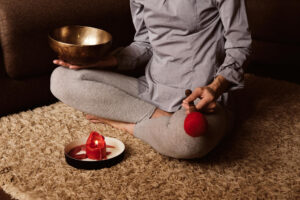
Sound bath healing for the body is when you lie back and allow a practitioner to play various instruments around you. You’ll likely be surrounded by other people on yoga mats draped with blankets and eye masks. Instruments used during sound bath healing include crystal singing bowls, Tibetan bowls, gongs, tuning forks, drums and chimes.
“Bath” doesn’t mean water. It means you are bathing in sound. Layers and layers of sound. As the vibrations fill up and surround your body, most people experience:
- A deep release of physical tension, particularly in the neck, shoulders, and chest
- Reduced anxiety and mental chatter
- A dreamlike, meditative state that feels restorative and deeply restful
- Emotional releases — sometimes tears, sometimes laughter
- Heightened sensory awareness and clarity after the session
Regular sound bath sessions have been associated with:
- Improved sleep quality
- Lower blood pressure
- Reduced symptoms of anxiety and depression
- Relief from chronic pain
- Enhanced mood and emotional resilience
The Role of Brainwave States in Frequency Healing
One of the most scientifically grounded aspects of sound healing is its relationship with brainwave entrainment. Here’s how different states correspond to healing outcomes:
- Beta (14–40 Hz): Alert, analytical, often anxious — the state most of us spend our working day in
- Alpha (8–14 Hz): Relaxed, creative, mildly meditative — the gateway state for healing
- Theta (4–8 Hz): Deep meditation, dreaming, emotional processing — where significant healing and memory reconsolidation occur
- Delta (0.5–4 Hz): Deepest sleep and regeneration — where physical repair processes are most active
Binaural beats , where two slightly different frequencies are played in each ear forcing your brain to hear a third “beat” in-between the difference frequency, are often employed intentionally to take the listeners into alpha, theta, or delta states. For example, taking a sound healing meditation with 6 Hz binaural beats will put you into a theta brainwave state in just minutes.
How The Five Elements Can Guide Your Sound Healing Journey
If you’re looking for something a little more specific, a little more directed, working with someone knowledgeable about sound healing can be incredibly beneficial. One way to understand sound healing is through the lens of the Five Elements. I love teaching sound healing through this lens on The Five Elements as it allows us to place sound healing in the larger context of how the five elements – earth, water, fire, air, and space, show up in our body and energy system.
Understanding how each of these elements lives in our body and energy system allows us to know that if we are out of balance with a certain element, we will feel it physically, emotionally, and energetically. When we use sound to heal from this perspective we can zero in on exactly what frequencies we want to use based on our dosha (body type), what we are feeling out of balance with, and what we want to heal.
For example, maybe you know that low sounds align with the earth element and you’ve been feeling particularly heavy or disconnected, so you use some low sounds to feel more grounded. Or perhaps you know that high sounds that are super far apart can help clear space and you’ve been feeling cloudy, so you use some of those sounds to open up.
Completing a sound healing teacher training course not only deepens one’s personal practice but equips graduates to serve their communities as credentialed, confident practitioners, whether offering private sessions, group sound baths, or corporate wellness programs.
Integrating Sound Frequency Healing into Daily Life
You don’t need a dedicated studio or expensive instruments to begin experiencing the benefits of therapeutic sound. Here are accessible ways to weave sound healing into everyday routines:
- Morning frequency exposure: Begin your day with 15–20 minutes of 432 Hz or 528 Hz music during journaling, stretching, or simply drinking your morning tea
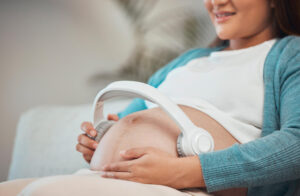
- Binaural beat meditations: Use headphones to experience binaural beat recordings during afternoon rest breaks — even 10 minutes can meaningfully shift your mental state
- Toning and humming: Your own voice is a powerful sound healing tool. Sustained humming activates the vagus nerve, reduces stress hormones, and creates internal vibration throughout the chest and throat
- Evening wind-down: Replace screen time before bed with delta-wave binaural recordings or soft 396 Hz or 528 Hz music to support deeper, more restorative sleep
- Sound bath sessions: Aim for at least one group or private sound bath session per month as a reset for your nervous system
Conclusion: Finding Your Frequency
Sound is something we don’t just listen to, we feel it resonate in our bodies, absorb it, utilize it on every level. Scientific research on therapeutic sound, as well as thousands of years of cross-cultural knowledge agree: specific frequencies can genuinely aid and support the body’s natural ability to heal.
Whether you’re learning about sound through solo listening sessions or group sound bath healings, working with a sound practitioner, or someday taking a sound healing teacher training yourself just start. Notice how your body reacts to various sounds and frequencies. Use your experience as data.
And if you are looking for a tradition that weaves sound into a larger understanding of nature, consciousness and well-being, the modalities described at The Five Elements is a rich authentic lineage for continuing that exploration.
Healing frequencies are calling. All you have to do is listen.
Frequently Asked Questions
Q1: Which single frequency is considered most healing for the body?
There is no universal answer, as different frequencies target different aspects of health. However, 528 Hz is most widely cited for its association with cellular repair, emotional healing, and deep relaxation. For grounding and stress relief, 432 Hz is equally popular and well-regarded.
Q2: How long does it take to feel the effects of sound frequency healing?
Many people report feeling noticeably calmer within the first 10–15 minutes of a sound session. Deeper effects — improved sleep, reduced anxiety, or pain relief — are typically experienced after several consistent sessions over two to four weeks.
Q3: Is sound healing meditation safe for everyone?
Sound healing is generally safe for most people. However, individuals with epilepsy, severe mental health conditions, or cochlear implants should consult a healthcare provider before participating. Pregnant women should also consult their midwife or doctor before attending intense gong sessions.
Q4: Can I do sound healing at home without instruments?
Absolutely. Many high-quality recordings of Solfeggio frequencies, binaural beats, and sound bath sessions are freely available on platforms like YouTube and Spotify. Headphones are recommended for binaural beat recordings to ensure the correct frequencies are delivered to each ear.
Q5: What is the difference between a sound bath and sound healing meditation?
A sound bath is typically a group or individual session led by a practitioner using live instruments, where participants passively receive the sound. Sound healing meditation may incorporate recorded frequencies, guided visualization, breathwork, or toning alongside sound making it a more active, participatory practice. Both offer significant benefits and can complement each other well.