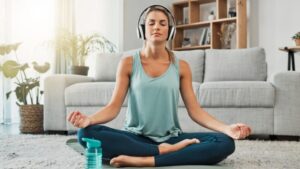
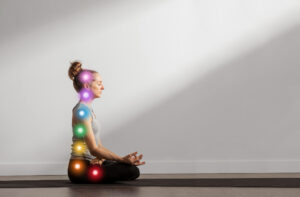
Attention and Focus have become almost higher currencies in these times of information overload and distraction, and one of the most valuable things one can find are tools to help to still one’s mind, to connect with one’s self, one’s being. Traditional meditation might practice awareness of the breath, and maybe silence or contemplation, but there are a host of Sound and Vibration-based meditation tools that can be of great assistance in reaching a focused state of meditation. Sound and vibration-based meditation is an ancient practice as well as one that is newly emerging for many people.
Understanding Sound and Vibration in Meditation Practice
Sound and vibration have been used as a part of contemplative practices for thousands of years. Tibetan singing bowls, Vedic chanting and other sonic traditions have long been used to focus the mind and open the heart, and practitioners have noted for thousands of years that certain frequencies and vibrations can promote specific brain wave activity, emotional states, and cognitive processes. But now we have scientific evidence from the field of neuroscience that validates these intuitions. It turns out that sound does indeed impact the nervous system in measurable ways.
When we are exposed to particular sound healing courses or vibrations during meditation, a number of neurological events take place in our brain and body. The sound waves are processed in the auditory cortex and thalamus, which filters and relays information to other parts of the brain. This entertainment can shift the brain from beta waves (associated with alert, active thinking) to alpha waves (relaxed awareness) or theta waves (deep meditation), setting the stage for deeper concentration.
Traditional Sound-Based Meditation Tools
-
Singing Bowls and Metal Resonators
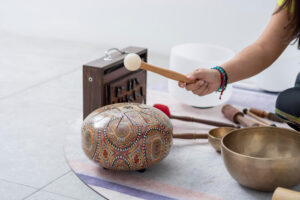
Tibetan and Himalayan singing bowls remain among the most recognized sound meditation tools. These handcrafted metal bowls produce rich, multi-layered tones when struck or circled with a mallet. The complex harmonic overtones create a sonic environment that naturally draws attention inward, making it easier to release mental chatter and anchor awareness in the present moment.
Crystal singing bowls offer a different acoustic experience with their pure, sustained tones. Made from quartz crystal, these instruments produce penetrating frequencies that practitioners often describe as both heard and felt throughout the body. The clarity of crystal sound healing bowl tones makes them particularly effective for those who struggle with traditional silent meditation.
-
Chanting and Mantra Repetition
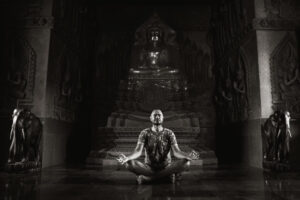
Vocal sound meditation through mantra repetition represents one of the oldest focus-enhancement techniques. The practice involves rhythmically repeating specific syllables, words, or phrases, either aloud or silently. The repetitive nature creates a focal point that occupies the discursive mind while allowing deeper awareness to emerge.
Different traditions use distinct mantras, from the universal “Om” to more complex Sanskrit phrases or simple affirmations in any language. The vibration created by vocal chanting adds a tactile dimension to the practice, as the vocal cords, throat, chest, and skull bones resonate with the sound. This full-body engagement enhances focus by providing multiple sensory anchors.
-
Bells, Chimes, and Gongs

Temple bells, tingsha cymbals, and gongs serve dual purposes in meditation practice. Their clear, attention-grabbing tones signal transitions in formal practice sessions while also providing focal points for awareness. The way these sounds arise, peak, and gradually fade offers a perfect metaphor for impermanence and a tangible object for sustained attention.
Large gongs produce particularly complex sound waves with multiple frequencies. During gong meditation or sound baths, participants lie down while practitioners play therapeutic gongs, creating an immersive sonic environment. The deep vibrations can be felt physically, engaging both auditory and tactile senses to facilitate profound states of concentration and relaxation.
Modern Technological Meditation Tools
-
Binaural Beats and Brainwave Entrainment
Binaural beats represent a modern innovation in sound meditation technology. This auditory illusion occurs when two slightly different frequencies are played separately into each ear through headphones. The brain perceives a third tone equal to the mathematical difference between the two frequencies. For example, a 200 Hz tone in one ear and 210 Hz in the other creates a perceived 10 Hz beat.
Different beat frequencies correspond to various brain wave states:
- Delta waves (0.5-4 Hz): Deep sleep and healing
- Theta waves (4-8 Hz): Deep meditation, creativity, and intuition
- Alpha waves (8-14 Hz): Relaxed focus and light meditation
- Beta waves (14-30 Hz): Active thinking and concentration
- Gamma waves (30-100 Hz): Peak cognitive performance and insight
Practitioners can select binaural beat frequencies that match their meditation goals, whether seeking deep relaxation or enhanced concentration for study or work.
-
Meditation Apps and Digital Sound Libraries
Smartphone applications have democratized access to sound meditation tools. Apps like Insight Timer, Calm, and Headspace offer extensive libraries of guided meditations, ambient soundscapes, and specialized audio tracks designed for focus enhancement. These platforms often combine multiple elements such as nature sounds, gentle music, binaural beats, and spoken guidance.
The convenience of digital tools allows practitioners to maintain consistent practice regardless of location or schedule. Many apps include timers, progress tracking, and customizable sound environments that can be tailored to individual preferences and practice goals.
-
Haptic Meditation Devices
Emerging wearable technology brings vibration directly into meditation practice through haptic feedback. Devices like meditation headbands or wrist-worn trackers use gentle vibrations to signal breathing rhythms, provide subtle attention cues, or mark practice intervals. These tactile prompts offer non-auditory alternatives for those in shared spaces or practitioners who respond better to physical sensations than sound.
Vibration-Based Meditation Approaches
-
Tuning Fork Therapy
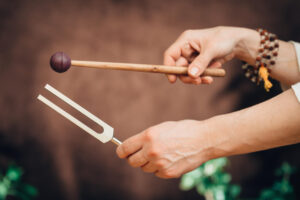
Tuning forks calibrated to specific frequencies provide precise vibrational meditation experiences. Practitioners place activated forks near the body or on specific points, allowing vibrations to resonate through tissues and bones. Different frequencies address various aspects of wellbeing, with certain tones believed to correspond to energy centers or physiological systems.
-
Vocal Toning and Humming

Creating vibration through your own voice offers powerful focus benefits without external tools. Vocal toning involves sustaining vowel sounds at comfortable pitches, feeling the vibrations resonate through the skull, chest, and abdomen. Humming practices like “Bhramari Pranayama” (bee breath) in yoga traditions create internal vibrations that soothe the nervous system while providing clear sensory focal points.
-
Vibroacoustic Therapy

Specialized furniture and devices deliver low-frequency vibrations directly through the body. Vibroacoustic chairs, beds, or mats embed speakers that transmit sound frequencies as physical vibrations. Lying or sitting on these surfaces while listening to specially composed music creates a multi-sensory meditation experience where sound is simultaneously heard and felt.
How Five Elements Centre Supports Your Sound and Vibration Meditation Practice
The Five Elements Centre has been teaching the Five Meditations for many years. They are able to offer guidance on the different techniques, and which are most appropriate to a student’s specific needs. The use of the traditional tools, and modern scientific knowledge, can be used together to form a simple and practical approach, which will enable the Five Meditations to become a regular and effective practice.
Choosing the Right Sound or Vibration Tool for Your Practice
Selecting meditation tools should be based on several personal factors:
Practical Considerations:
- Your living situation (privacy, noise tolerance of others)
- Budget for tools or technology
- Physical space available for practice
- Portability needs if you travel frequently
- Sensory preferences (some people respond better to certain frequency ranges)
Practice Objectives:
- Quick focus enhancement for work or study
- Deep relaxation and stress reduction
- Spiritual exploration and self-inquiry
- Physical tension release and body awareness
- Emotional regulation and processing
Personal Response:
- Notice which sounds naturally capture your attention
- Observe whether you prefer external sounds or self-generated vibrations
- Consider whether you’re drawn to simple or complex sonic environments
- Assess your response to digital versus acoustic healing instruments
Combining Sound Tools with Other Techniques
Sound and vibration meditation gains effectiveness when integrated with complementary practices:
- Breath awareness: Synchronize listening with natural breathing rhythms, allowing sound to mark inhalation and exhalation cycles.
- Body scanning: Use sound as a background while systematically bringing attention to different body regions, noticing how vibrations are perceived throughout.
- Visualization: Imagine sound waves or vibrations as colors, light, or energy flowing through the body, engaging visual imagination alongside auditory focus.
- Movement practices: Gentle yoga, tai chi, or walking meditation can be enhanced with ambient sound or binaural beats, creating integrated mind-body experiences.
Common Challenges and Practical Solutions
Difficulty Maintaining Focus on Sound
If your mind wanders frequently despite using sound tools, this represents a normal meditation experience rather than failure. Instead of struggling against distraction, gently acknowledge where attention has gone and return to the sound. Each return strengthens focus capacity.
Overstimulation or Agitation
Some practitioners find certain sounds or frequencies overstimulating rather than calming. If you experience increased agitation, restlessness, or anxiety during sound meditation, experiment with different tones, volumes, or tools. Lower frequencies and simpler tones often feel more grounding, while high-pitched or complex sounds may energize or unsettle.
Accessibility and Resource Limitations
High-quality singing healing bowls, specialized apps, or vibroacoustic equipment require financial investment that may not be feasible for everyone. Fortunately, many effective sound meditation options cost nothing. Your own voice through humming or toning, free guided meditations on platforms like YouTube, or nature sounds available through free apps provide genuine focus benefits.
Beyond Focus: Comprehensive Benefits of Sound Meditation
While this article is titled on ways to sharpen your focus, don’t be fooled that the practices of sound and vibration meditation will only sharpen your focus. You will likely notice an abundance of benefits that radiate throughout your life. As time goes on and the stress and anxiety within you is relieved, there will be more space for your attention to be. You will get a better night’s sleep which will allow for you to be more alert during your day. Your ability to regulate your emotions will increase, meaning your moods won’t so easily get in the way of your focus.
So, you may not want to focus on your focus all the time during your practice! You can tend to see your focus as the be all and end all, however in my experience, the more you practice the more you notice improvements in your relationships, your creativity, your physical well-being and your overall life satisfaction. A greater focus is just the tip of the iceberg.
Starting Your Sound and Vibration Meditation Journey
Don’t be too hard on yourself. When you’re trying something new, you’re going to fiddle around a bit before you find what works for you. And that’s OK. The smallest, simplest starting point is always the best starting point. A free app, your own humming or even just listening is perfect.
Try to spend a few minutes a day meditating or focusing rather than a few hours occasionally. It’s really easy to lose focus for long periods of time and end up focusing on the fact that you’re not focusing. Better a little bit every day.
If it becomes part of your daily routine, you can always spend longer and add in other elements that you like.
Don’t compare yourself to others. Meditation and vibration has a greater effect on some people than on others, and it may take months before you notice a slight change in your focus.
Meditating with sound and vibration is a skill, and you can’t rush the learning process of a new skill. Focusing is important, but being kind to yourself is more important. Instead of trying to train your mind to be a razor-focus machine, you might be training it to be kind and patient with yourself in the long term.
Frequently Asked Questions
What type of meditation helps with focus?
Concentration meditation practices work best for focus, including mantra repetition, breath counting, sound-based meditation with singing bowls or binaural beats, and single-point focus techniques. These train the mind to sustain attention on chosen objects, strengthening focus capacity over time.
What is sound meditation good for?
Sound meditation reduces stress and anxiety, improves sleep quality, enhances concentration and mental clarity, supports emotional regulation, and facilitates deeper meditative states. The vibrational qualities can also provide physical relaxation and tension release throughout the body.
How to meditate properly for focus?
Choose a specific focus object like breath, sound, or mantra. Sit comfortably with alert posture. When attention wanders, gently return to your chosen object without self-criticism. Practice consistently for short periods daily rather than sporadically for longer sessions. Gradually increase duration as capacity builds.
What is vibration meditation?
Vibration meditation uses physical vibrations as focus objects, including sound waves felt in the body, vocal humming resonance, tuning fork therapy, or vibroacoustic devices. Practitioners direct attention to subtle vibrational sensations, using these tactile experiences as anchors for awareness and gateways to deeper meditative states.
How to increase focus in 5 minutes?
Practice focused breathing by counting ten breaths while noticing full inhalation and exhalation cycles, use a brief binaural beat track calibrated for concentration, try vocal humming to create internal vibration and calm the nervous system, or listen to a singing bowl recording while releasing tension from your body.