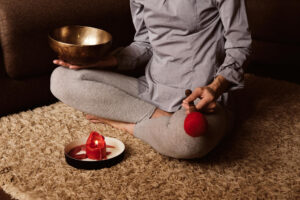
With life getting so hectic and fast-paced it’s hard to find true silence. Between all the chaos there exists an ancient healing technique that uses sound vibrations to bring us back to center. Sound healing meditation works by using different vibrations and frequencies to help align your body, mind, and spirit.
Sound healing meditation is a practice that involves using different tones and vibrations to help improve your overall health. By listening to certain sounds you can help your body relax and heal itself.
Sound healing meditation is an ancient practice that promotes healing and wellness. Using tools such as crystals, tuning forks, and voice toning this meditation allows us to release tension and restore our natural frequency.
The Ancient Roots of Vibrational Medicine
Centuries before science discovered sound frequency could be used for healing, ancient peoples knew the value of vibration. Tibetan monks have used singing bowls in meditation for over 2,000 years. Australian Aborigines have used didgeridoos in healing ceremonies for 40,000 years. Ancient Egyptians used chants of vowel sounds in temples of healing. Indians discovered nada yoga, the yoga of sound.
Ancient cultures from around the world stumbled upon the secret that sound influences consciousness and consciousness influences health. They just knew it. Now we are starting to figure it out.
Understanding the Scientific Basis of Sound Healing
Sound healing is based on many scientific facts we now understand about sound and the physics of the universe. Vibrations Per Second Every single cell in your body resonates at a particular frequency. When your cells vibrate healthily, they do so in harmony with each other. This is known as your “biological resonance.”.
Entrainment When two vibrations interact, the stronger vibration will pull the weaker vibration out of its pattern and into alignment with itself. Sound frequencies can “entrain” the vibrations in your body. Restore Your Vibrational Health In sound healing courses, we use specific sound frequencies to help bring your body back into its original vibrational state. Sounds Affect Matter When sound waves move through a medium (like water or sand) they form geometric patterns. From 1960 to 1970, Dr. Hans Jenny spent a decade recording the effects that sound had on matter like sand, liquids, and other materials. His studies are known as Cymatics.
Neurologically, sound healing influences our brainwave states. Our brain operates at different frequencies depending on our consciousness level:
- Beta waves (14-30 Hz): Active thinking, problem-solving, focused attention
- Alpha waves (8-13 Hz): Relaxed awareness, light meditation, creativity
- Theta waves (4-7 Hz): Deep meditation, REM sleep, access to subconscious
- Delta waves (0.5-3 Hz): Deep sleep, healing, regeneration
Sound healing instruments are specifically tuned to guide the brain from high-frequency beta states into the more restorative alpha, theta, and delta ranges. This explains why participants often report feeling deeply relaxed yet mentally clear after sessions.
Primary Instruments and Their Therapeutic Applications
Below are some popular Sound Healing instruments and the vibrations they offer: Tibetan singing bowls, containing healing properties based on seven different metals, offer harmonic singing bowl vibrations used for practices such as aligning chakras. Crystal singing bowls vibrate at a pure tone that many enjoy due to its healing crystal properties.
Gongs produce large amounts of room-filling vibrations. These long sustained notes can wash over you with the ability to help clear your mind. Tuning forks allow you to apply specific vibrations to the body by holding them on acupuncture points or around the body.
The Experience: What Happens During a Sound Healing Session
- Participants lie comfortably on mats, usually with blankets for warmth and support.
- The session is receptive in nature, no active concentration is required, participants simply allow the sound vibrations to flow through them.
- The practitioner begins with soft, gentle tones to promote relaxation.
- Gradually, deeper and more intensive frequencies are introduced as the session progresses.
- Many individuals experience physical sensations such as tingling, warmth, or gentle pulsations in different parts of the body.
- Some report sensations of floating or waves of energy moving through them.
- Acoustic vibrations interact with the body and brain in measurable ways.
- EEG studies show that sound healing can shift brainwave patterns within minutes.
- Participants often enter theta brainwave states, linked to deep meditation, intuitive insight, and enhanced healing processes.
- Regular sessions may improve sleep quality and reduce anxiety.
- Ongoing practice can enhance creativity and emotional resilience.
- Some individuals experience emotional release or gain sudden clarity about personal challenges.
How Five Elements Approaches Holistic Wellbeing
If you’re looking for real answers when it comes to sound healing, seek out professionals who can offer guidance. Those who have studied have had the opportunity to learn ancient teachings as well as modern. They take a holistic approach when working with sound healing. Holistic means they understand we are made of body, mind, and spirit.
You can’t work on one without the other if you want to experience true healing. I love the motto that Five Elements has, balance doesn’t force anything to change. In order for sound healing to be therapeutic we have to remember we are working with vibrational energy. We don’t have to push, but can guide if we are wanting to heal from stress, process emotions, or evolve spiritually.
Documented Benefits and Clinical Research
While sound healing’s ancient lineage provides compelling testimonial evidence, modern research increasingly validates its therapeutic efficacy. A 2016 study published in the Journal of Evidence-Based Complementary and Alternative Medicine found that participants experienced significant reductions in tension, anxiety, depression, and anger after sound meditation sessions using Himalayan singing bowls. Perhaps most remarkably, spiritual wellbeing increased for all participants.
Research on sound healing for luxury spa environments has revealed interesting findings about stress reduction in high-stress professional populations. Corporate executives and healthcare workers participating in regular sound healing sessions showed measurable decreases in cortisol levels, the primary stress hormone along with improved heart rate variability, a key marker of nervous system resilience.
The therapeutic applications extend beyond stress relief. Preliminary studies suggest sound healing may help manage chronic pain conditions, with some participants reporting significant pain reduction that persists beyond the immediate session. This makes sense given that pain perception involves complex neurological processing that sound frequencies can influence.
For those dealing with insomnia or sleep disorders, sound healing offers a drug-free alternative. The entrainment effect helps guide the brain into delta wave patterns associated with deep, restorative sleep. Many participants report falling asleep more easily and experiencing improved sleep quality after incorporating regular sound healing sessions into their wellness routines.
Integration with Other Healing Modalities
Sound healing rarely exists in isolation within comprehensive wellness practices. It integrates beautifully with yoga, breathwork, aromatherapy, and energy healing modalities like Reiki. This synergistic approach amplifies benefits, as multiple therapeutic elements work together to support the body’s innate healing intelligence.
Breathwork paired with sound creates particularly powerful experiences. Specific breathing patterns already shift consciousness and nervous system states; when combined with therapeutic frequencies, these effects deepen considerably. Some practitioners guide participants through conscious connected breathing while playing healing instruments, creating multi-dimensional healing experiences.
The relationship between sound healing and mindfulness meditation deserves special attention. While traditional mindfulness uses present-moment awareness of thoughts, sensations, and emotions, sound healing provides a tangible focal point for the vibrations themselves. For people who struggle with silent meditation, this external anchor can make meditation practice more accessible and immediately rewarding.
Practical Considerations for Home Practice
While working with trained practitioners offers distinct advantages, sound healing practices can certainly be incorporated into personal home routines. High-quality recordings of singing bowls, gongs, and other healing instruments provide accessible entry points. However, live instruments create physical vibrations that recordings cannot replicate something worth considering for serious practitioners.
When starting a home practice, creating an intentional space matters significantly. This doesn’t require elaborate preparation, but removing potential distractions and creating comfortable physical positioning helps optimize the experience. Many practitioners find that consistency practicing at the same time and place builds momentum and deepens results over time.
Simple vocal practices offer another accessible avenue. Humming, toning specific vowel sounds, or chanting mantras all create internal vibrations with therapeutic effects. These practices cost nothing, require no special equipment, and can be done virtually anywhere privacy allows.
Addressing Common Misconceptions
Sound healing has been criticized by skeptics as being nothing more than placebo or New Age nonsense. To be sure there are plenty of people out there making outlandish claims about sound healing. However, there are many legitimate studies from a variety of scientific fields (acoustics, neuroscience, cellular biology, psychology, etc.) that lend credence to sound healing.
Even something as often misunderstood as the placebo effect isn’t necessarily all it’s cracked up to be. But if something holds benefit due to belief and/or expectation, that doesn’t make it any less “real” than something that can impact your body regardless of your beliefs. Having measurable physiological changes like altering brainwave states, increasing heart rate variability, and decreasing stress hormones are a little more than positive thinking.
Some people believe you have to be “spiritual” in order to receive the benefits of sound healing. The thing is that vibrations act on your physiology whether you believe in a higher power or not. There is nothing magic about it. You can receive the benefits of sound healing from a very scientific, non spiritual mindset. Regulating your nervous system and releasing stress have nothing to do with one’s level of spirituality.
Conclusion: Harmonizing Body, Mind, and Spirit
Sound healing meditation is an art form that effortlessly connects you to ancient traditions while also being supported by modern science. Many hospitals, corporations and spas are offering sound healing to clients as vibrational medicine becomes more accepted in mainstream culture.
If you are someone who is drawn to science, religion/spirituality or even if you just really enjoy deep relaxation, there are easy ways for you to include sound healing into your life. Why? Because everything in the universe has vibration, that includes your body and your mind. When we work with certain vibrations intentionally, we can begin to shift our body’s physical frequency, change the emotions we think we’re stuck with and open our minds to something greater than what we usually experience in our day to day thoughts.
With sound healing we can learn to manipulate our vibratory state to allow the body to let go and return to a state of balance. Research is being done all the time on the effects sound can have on our bodies and mind, and as we learn more we will see sound healing become a more mainstream practice. In the meantime, there are millions of people all over the world who are already tuning into the power of sound to help heal ourselves and others. Sometimes, less really is more.
Here are a few ways you can dive into the world of sound healing. Book yourself a session with a sound healer, attend a group sound bath or explore the sounds on your own with tuning forks, singing bowls, drumming or your own voice. Trust me, your body will know what to do. Just listen, feel and enjoy the ride.
Frequently Asked Questions
How often should I practice sound healing meditation for noticeable benefits?
For most people, weekly sessions provide substantial benefits, though even monthly practice offers value. Daily listening to healing frequencies or personal vocal practices enhances results significantly. Consistency matters more than duration, regular 20-minute sessions typically produce better outcomes than occasional longer sessions.
Can sound healing help with specific medical conditions?
Sound healing shows promise as complementary therapy for stress-related conditions, anxiety, chronic pain, and sleep disorders. However, it should never replace conventional medical treatment for serious conditions. Always consult healthcare providers about integrating sound healing into comprehensive treatment plans.
Are there any contraindications or people who shouldn’t try sound healing?
People with sound-sensitive epilepsy, severe mental health conditions, or wearing pacemakers should consult medical professionals before participating. Pregnant women should inform practitioners, as certain techniques require modification. Generally, sound healing is remarkably safe when practiced responsibly.
What’s the difference between listening to healing music and actual sound healing?
While relaxing music offers genuine stress relief, therapeutic sound healing uses specific frequencies, intentional technique, and often physical vibrations absent in recorded music. Live instruments create harmonic complexity and vibrational fields that recordings cannot fully replicate, though quality recordings still provide meaningful benefits.
How do I find a qualified sound healing practitioner?
Look for practitioners with formal training, certification from recognized programs, and transparent information about their background. Personal recommendations, reviews, and initial consultations help assess whether a particular practitioner’s approach resonates with your needs. Trust your intuition, the therapeutic relationship matters as much as technical skill.