Sound bath healing has gained popularity in recent years as a powerful practice that can help you release stress, calm your emotions, and tune into yourself on a deeper level. Many describe sound bath healing as spiritual, but rest assured that the healing effects of sound are very real (even if they are a bit magical).
Sound baths rely on ancient wisdom as well as modern-day research on vibration, frequency, and how the body regulates the nervous system. In this article, we’ll cover exactly what sound bath healing is, how it works, the benefits you can experience, and how to approach sound healing with your eyes (and ears) wide open.
Curious how sound & vibration can affect your body and mind? You’ve got questions, and we’ve got answers.
Understanding Sound Bath Healing
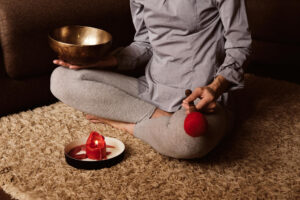
A sound bath is an energetic healing practice where individuals are surrounded by waves of sound from instruments like singing healing bowls, gongs, chimes, tuning forks, and other healing instruments. The intention is not to perform music for entertainment. Rather, the goal is to create a meditative atmosphere using sound that promotes inward alignment and relaxation.
People attending a sound bath typically lay down while the practitioner plays long tones and vibrational frequencies. The sound reverberates through the room and into your body which consists of mostly water and other conductive materials. Sound has the potential to affect your body physiologically, especially the nervous system.
The word bath means to be enveloped by sound, not water.
Historical Roots of Sound Healing
Sound has been used for healing for thousands of years across cultures:
- Ancient Tibetan traditions used singing bowls for meditation and spiritual rituals
- Indigenous cultures used drumming and chanting for community healing ceremonies
- Ancient Greek physicians, including Pythagoras, studied the therapeutic effects of musical intervals
- Vedic traditions incorporated mantra chanting for mental purification and spiritual growth
Modern sound bath healing integrates these traditions with contemporary knowledge of acoustics and psychology.
How Sound Bath Healing Works
While scientific research is still evolving, several mechanisms may explain how sound baths influence wellbeing.
1. Nervous System Regulation
Sound baths often encourage the brain to shift from beta waves, associated with active thinking and stress, to alpha and theta waves, associated with relaxation and meditation. This shift can activate the parasympathetic nervous system, which promotes rest and recovery.
2. Vibrational Resonance
Every organ and tissue in the body has a natural vibratory frequency. When exposed to harmonic tones, some practitioners believe that the body may entrain or synchronize with certain frequencies, supporting energetic balance.
3. Breath and Awareness
Sound sessions naturally slow breathing patterns. When combined with intentional breathing, the body may enter a state similar to deep meditation.
4. Emotional Release
Certain sound frequencies may help individuals access suppressed emotions or stored stress patterns, allowing gentle emotional processing.
What Happens During a Sound Bath Session?
A typical sound bath session includes:
- A short introduction and grounding exercise
- Participants lying comfortably on yoga mats or cushions
- Use of instruments such as crystal singing bowls, Tibetan bowls, gongs, chimes, or tuning forks
- Periods of silence between sound sequences
- A gradual closing phase to transition participants back to awareness
Many participants report sensations such as warmth, tingling, emotional clarity, or deep stillness.
Benefits of Sound Bath Healing
Although individual experiences vary, several commonly reported benefits include:
Reduced Stress and Anxiety
Sound baths promote deep relaxation. The calming tones can help reduce cortisol levels and quiet mental overactivity.
Improved Sleep Quality
By encouraging parasympathetic activation, sound healing may improve sleep onset and quality, particularly for individuals experiencing insomnia linked to stress.
Enhanced Emotional Balance
The meditative state can create space for emotional awareness and release, supporting mental clarity.
Increased Focus and Creativity
After a session, many participants describe heightened concentration and creative insight.
Physical Relaxation
Sound vibrations may ease muscular tension and promote a sense of lightness in the body.
Potential Psychological and Physiological Effects
Research on sound therapy has suggested several possible effects:
- Lower heart rate
- Reduced blood pressure
- Improved mood states
- Enhanced mindfulness
- Greater sense of wellbeing
While more large scale clinical studies are needed, preliminary findings support the calming influence of sound based interventions.
Sound Bath Healing and Modern Wellness Practices
Sound bath healing sessions are being offered along with other complementary practices like meditation, breathwork, yoga and more. Yoga with Sound Healing is one wellness practice that has become popular.
Mixing easy yoga poses and vibrational sound can open the body up to let go of any tension and allow the mind to settle into meditation. Practicing these together may provide greater benefits for both the body and emotions.
Who Can Benefit from Sound Bath Healing?
Sound bath sessions may be helpful for:
- Individuals experiencing chronic stress
- Professionals seeking mental clarity
- Students facing academic pressure
- Yoga practitioners deepening meditation
- Wellness facilitators expanding therapeutic skills
However, individuals with certain medical conditions, such as sound sensitivity disorders or severe psychiatric conditions, should consult healthcare professionals before participating.
Becoming a Practitioner: Education and Training
As interest in sound healing grows, structured education programs have developed to ensure responsible and informed practice. Programs such as Sound Healing Teacher Training are designed to provide foundational knowledge in acoustics, anatomy, ethics, and facilitation skills.
Participants often learn:
- The science of frequency and vibration
- Safe instrument handling
- Session structure and client care
- Ethical boundaries and consent
- Integration with meditation or yoga
Short term programs, including 30 hours Sound Healing courses, can offer introductory certification, while more extensive training may provide advanced competency.
Professional training helps maintain quality standards and supports the credibility of this evolving field.
Instruments Used in Sound Bath Healing
Different instruments produce distinct frequencies and textures. Commonly used tools include:
- Crystal singing bowls
- Tibetan singing bowls
- Gongs
- Tuning forks
- Koshi chimes
- Frame drums
- Shruti boxes
Each instrument carries unique harmonic properties. Experienced practitioners understand how to layer sounds to create balanced sonic landscapes.
The Role of Intention and Environment
Sound bath healing is not only about instruments. The setting and facilitator presence also play important roles. Key elements include:
- A quiet, safe environment
- Clear session intention
- Respectful guidance
- Gradual sound progression
- Grounded closing phase
Responsible facilitators maintain participant comfort and ensure transitions are gentle.
The Science Behind Sound and the Human Body
Sound is vibration manifested through a medium. The human body is predominantly made up of water, which moves with vibrational energy. Psychoacoustics and vibrational medicine are new sciences studying the effect of frequency on the body’s functions.
Research around brainwave entrainment has shown that continuous exposure to pulsing sound can affect the brain’s wave patterns. More research is needed but initial findings have been positive when used for relaxation and as a supplemental aid for mental wellbeing.
Sound bath healing should never replace your doctor’s visits.
Integrating Sound Healing Into Daily Life
Individuals who experience benefits from sound baths may incorporate simple sound practices at home:
- Listening to calming frequencies during meditation
- Chanting simple mantras
- Using small singing bowls for personal grounding
- Practicing breath awareness with soft background tones
These practices can support ongoing stress management and self reflection.
Ethical and Professional Considerations
As the popularity of sound healing increases, ethical responsibility becomes essential. Practitioners should:
- Obtain proper training
- Avoid medical claims
- Maintain clear boundaries
- Practice informed consent
- Respect cultural origins of instruments
How Five Elements Supports Holistic Exploration
Centers that teach from an integrative wellness model can help you navigate how to approach sound based practices with care. Five Elements teaches wellness with an emphasis on holistic balance in your body, heart, and energy.
By offering workshops and class series Five Elements provides students with tools to safely learn with mindfulness and intention instead of following the latest trend. We support students in understanding how sound practices connect to other contemplative practices as well.
If you find yourself diving into any number of courses like 30 hours Sound Healing or Yoga and Sound Healing look for schools with a mentorship structure.
Common Misconceptions About Sound Bath Healing
There are several myths surrounding this practice.
Myth 1: It is purely spiritual.
While spiritual traditions influence sound healing, modern sessions can be experienced purely as relaxation practices.
Myth 2: It replaces medical treatment.
Sound healing complements healthcare but should not substitute professional medical advice.
Myth 3: Anyone can facilitate without training.
Proper education ensures safety and effectiveness.
The Future of Sound Healing
As wellness sciences evolve, interdisciplinary research may further clarify how vibrational therapy influences human physiology. With increasing integration into therapeutic settings, sound healing may continue to expand within:
- Integrative medicine clinics
- Corporate wellness programs
- Mental health support services
- Yoga studios and retreat centers
Structured Sound Healing Teacher Training programs will likely play a key role in standardizing quality and preserving ethical standards.
Conclusion
Sound bath healing work beautifully bridges many old traditions around sound vibrations and energy with our current culture focused on stress relief. Sound baths affect the nervous system, allow the body to release tension and dive deeply into relaxation, and open us up to feelings.
You can enjoy sound baths safely whether you’re lying on the ground absorbing the sounds yourself or taking Sound Healing Teacher Training to learn how to facilitate them for others. As long as sound healing is approached with care and used as one of many tools in your self-care toolbox (such as Yoga and Sound Healing classes), we can continue to integrate these practices in a way that supports our lives.
The more sound healing becomes mainstream, the more important it is to offer teaching with integrity. This means continuing to run classes with sound healing intentions through schools like Five Elements and striving to be educated and ethical in our approach.
Frequently Asked Questions
1. Is sound bath healing scientifically proven?
Research is ongoing. Preliminary studies show benefits for stress reduction and relaxation, but more large scale research is needed.
2. How often should someone attend a sound bath?
Frequency depends on individual goals. Some attend weekly for stress management, while others participate occasionally for relaxation.
3. Can beginners attend without prior meditation experience?
Yes. Sound baths are accessible to beginners and do not require previous meditation training.
4. What should I bring to a session?
Comfortable clothing, a yoga mat, blanket, and water are usually recommended.
5. Can I become certified in sound healing?
Yes. Programs such as Sound Healing Teacher Training and structured 30 hours Sound Healing courses provide foundational knowledge for aspiring practitioners.