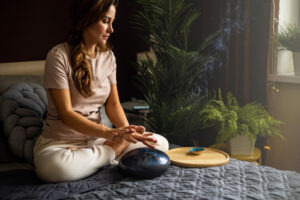
Sound has been employed as an instrument of inner balance for millennia. At ancient temples and modern meditation studios, in pyramids and sacred groves, specific instruments were (and still are) used to calm the nervous system, synchronise brainwaves and induce deeper states of awareness. Mindfully deployed, sound healing instruments can turn a simple meditation practice into a multi-sensory journey that supports emotional, mental and physical well-being.
This article features ten powerful sound healing instruments that can be integrated into your own meditation practice. It is written from an informational and education focus so you can make informed decisions, practise safely, and understand, at a practical level, how the tools work.
How Sound Healing Supports Meditation
In meditation practice, the mind may drift in and out of focus and distraction. Smooth repetitive tones allow the brain to move from busy beta waves to slower alpha and theta states, which help with relaxation, introspection and insight into creative ideas. Vibrations are experienced in the body, through breath and muscular tension.
Key ways in which sound healing supports meditation include:
- Deep relaxation – Sustained tones help the body move out of “fight or flight” and into a calmer parasympathetic state.
- Improved concentration – A stable sound source gives the mind an anchor, reducing mental chatter.
- Emotional regulation – Certain frequencies and rhythmic patterns may help release stored tension and encourage emotional balance.
- Enhanced body awareness – Vibrations felt in the chest, head, or hands increase awareness of subtle sensations, supporting mindfulness practices.
Sound healing is not a replacement for medical treatment or psychotherapy, but it can be a valuable complementary practice when used with care and proper guidance.
1. Himalayan Singing Bowls

Himalayan or metal singing bowls are among the most recognisable sound healing instruments. Traditionally made from a blend of metals, they produce rich overtones when struck or played around the rim with a wooden mallet.
How they support meditation
- The layered frequencies create a gentle “sonic cocoon” that helps practitioners settle quickly into stillness.
- Slow, circular movements of the mallet encourage coordinated, mindful breathing.
- The vibration can be felt through the hands and sometimes through the body when the bowl is placed on or near it, which increases somatic awareness.
Himalayan bowls are particularly effective for beginners because their sound is grounding, stable, and easy to follow.
2. Crystal Singing Bowls

Crystal bowls, often made from quartz and tuned to specific musical notes, produce clear, resonant tones that seem to “fill” the room. Many sets are aligned with the major chakras, allowing a structured approach to energy-based meditation.
Meditation applications
- Practitioners often focus on one bowl at a time, using its tone to explore a particular area of the body or emotional theme.
- The long sustain of a crystal bowl encourages extended exhalations, which supports relaxation and nervous-system regulation.
- Layering two or more bowls can create harmonies that guide group meditations or longer healing journeys.
Crystal bowls are powerful instruments and should be used with sensitivity—especially for people who are sound-sensitive, recovering from trauma, or prone to headaches. Short, gentle sessions are advisable at the beginning.
3. Resonant Therapy Bowls

Smaller resonant bowls are designed for close-up work, either around the head and shoulders or near specific joints and muscles. Their pitch is often slightly higher than large meditation bowls, creating a more focused, bell-like sound.
Why they are useful
- They are ideal for short, targeted practices such as starting or closing a meditation, setting an intention, or marking transitions between exercises.
- Their compact size makes them suitable for home practice, small spaces, or travel.
- When used thoughtfully, they can draw attention to particular areas of the body, supporting body-scan meditations.
These bowls provide precision and clarity, making them valuable tools for teachers, therapists, and experienced practitioners.
4. Chimes and Bar Chimes

Chimes, whether in the form of hanging bars, swinging chimes, or multi-bar instruments produce light, shimmering tones that evoke spaciousness and subtle movement.
Roles in meditation
- Chimes are often used to gently begin or end a session, signalling the mind to shift from everyday activity into contemplative space.
- When played softly in repeating patterns, they can support breath-focused or open-awareness practices.
- Their higher frequencies complement the deeper tones of bowls and drums, balancing the overall sound field.
Scared Chimes are particularly effective for guided visualisations, heart-centred meditations, and practices that work with feelings of expansion or lightness.
5. Tingsha and Cymbal Chimes

Tingsha are small paired cymbals traditionally used in Himalayan ritual practice. When struck together, they produce a bright, penetrating tone with a long sustain.
Best uses
- Clearing mental fog or lethargy at the beginning of a meditation.
- Bringing attention back to the present moment when the mind is scattered.
- Marking key points in a practice, such as the end of silent sitting or the transition into journaling.
Because of their intensity, tingsha should be used sparingly, especially in enclosed spaces or with people who are sensitive to sudden sounds.
6. Gongs

Gongs are large, circular metal instruments capable of producing a full spectrum of frequencies—from deep, low rumbles to shimmering high overtones. Gong baths and gong meditations have become increasingly popular in modern wellness settings.
Meditative benefits
- The complex waveforms generated by a gong can induce a strong sense of immersion, making it easier to let go of internal dialogue.
- Many practitioners report a feeling of “time suspension” during gong sessions, which can support profound rest.
- Skilled facilitators can vary dynamics, rhythm, and intensity to guide participants through different emotional and energetic landscapes.
Because of their power, gongs require training and sensitivity. Volume should be carefully controlled to avoid overwhelming listeners.
7. Frame Drums and Shamanic Drums

Frame drums—simple drums with a shallow frame and a single head—are among the oldest musical instruments in human history. In meditative contexts, they are often played with a steady, repeating rhythm.
How rhythm supports meditation
- Repetitive drumbeats can synchronise with the heartbeat and brainwaves, encouraging deeper, trance-like states.
- Drums are particularly effective for grounding practices, embodiment work, and releasing restlessness.
- Gentle drumming can be paired with walking meditation, breathwork, or visualisation.
Volume and tempo should be adapted to the group or individual so that the sound supports rather than distracts from awareness.
8. Handpans and Tongue Drums

Handpans and tongue drums are modern melodic percussion instruments that produce soft, bell-like tones arranged in scales. They are intuitive to play and do not require advanced musical training.
Meditation use cases
- Their repeating patterns and harmonious intervals encourage a feeling of flow and playfulness, which is useful for people who find silent sitting challenging.
- The combination of rhythm and melody supports both active meditations and contemplative listening.
- They can be integrated into group circles, gentle movement practices, or individual reflection.
These instruments are particularly suitable for people who wish to create their own meditative music at home.
9. Earth and Water Rhythm Tools

Instruments such as rainsticks, ocean drums, thunder tubes, and similar tools imitate natural sounds like rainfall, rolling waves, or distant thunder.
Why they are powerful in meditation
- They help reconnect practitioners with elemental forces, evoking a sense of being close to nature even in urban environments.
- The non-linear, flowing sound patterns support letting go of rigid thought structures and expectations.
- These instruments integrate well into grounding practices, releasing rituals, and visualisations involving forests, mountains, or oceans.
Because earth and water rhythm sound is gentle and continuous, they are also suitable for shorter relaxation breaks during the day.
10. Drone Instruments and Vocal Toning
Drone instruments, like the shruti box, tanpura, or harmonium, offer a constant tonal base over which the voice or another instrument may wander. Vocal toning (continuous vowels or seed syllables) creates the body itself as a sound healing instrument.
Applications in meditation
- A continuous drone helps establish a “sonic baseline”, making it easier to notice subtle fluctuations in attention and emotion.
- Chanting or toning engages the breath, diaphragm, and chest, strengthening the connection between voice and body.
- Group chanting can foster a sense of community, shared intent, and emotional safety.
Careful, mindful use of the voice can be a powerful tool for self-regulation and self-expression.
Practical Tips for Using Sound Healing Instruments Safely
To ensure that your sound-based meditation practice remains supportive and sustainable, consider the following guidelines:
- Start gently – Begin with short sessions (10–15 minutes) and moderate volume, especially if you are new to sound healing.
- Observe your body’s response – Notice changes in breathing, heart rate, and emotional state. If you feel overwhelmed, pause or reduce intensity.
- Respect individual sensitivity – Some people may be sensitive to certain frequencies or sudden sounds. Always ask for feedback when working with others.
- Integrate silence – Allow periods of quiet before and after playing instruments so that the nervous system can fully assimilate the experience.
- Avoid claims of cure – Sound healing can support well-being but is not a replacement for medical or psychological care. Consult qualified professionals for health concerns.
Choosing the Right Sound Healing Instrument
Selecting an instrument is a personal process. The most effective tool is the one that you feel naturally drawn to and comfortable using over time.
When evaluating options, it may help to consider:
- Intended purpose
- Deep relaxation
- Focused meditation
- Emotional release
- Group sessions or personal practice
- Practical aspects
- Size and portability
- Maintenance requirements
- Suitability for your living or practice space
- Your own sensitivity
- Preference for low, grounding tones or higher, shimmering sounds
- Comfort with strong vibrations or subtler, delicate frequencies
Trying different instruments in person, listening carefully to their resonance, and noticing your body’s reaction will help you make an informed decision.
How Five Elements Centre Helps You Use Sound Healing Wisely
For many, the challenge is not just the selection of an instrument but rather how to play it in a way that is thoughtful, safe, and meaningful. This is where guidance in a structured environment can be very helpful.
In the Five Elements Centre, sound healing is taught as a precise art based on respect for traditional knowledge as well as a sound understanding of how the nervous system works. Teachers will commonly:
- Demonstrate correct playing techniques so that instruments are used with sensitivity rather than force.
- Design sessions that combine breathwork, intention setting, and periods of silence with bowls, chimes, and other healing instruments.
- Encourage participants to reflect on their experiences, helping them develop self-awareness rather than simply “consuming” relaxing sounds.
By experiencing sound healing in a guided environment, practitioners gain the skills and confidence to continue their practice at home in a responsible way.
The many people who later go on to form their own collection of bowls, chimes or rhythm tools, are invariably inspired by their experiences at the Five Elements Centre. They have learned practical ways to apply this knowledge in supporting the stresses of everyday life, sleep and contemplative practice.
Integrating Sound Healing into Your Meditation Journey
Sound healing instruments are not merely for show or collection. These are tools for developing presence, balance, and clarity of mind. Whether you are immediately attracted to the warm richness of a Himalayan bowl, the pure transparency of a crystal, the steady beat of a drum, or the gentle mist of an ocean drum, each will have its own, unique offerings for leading you into the meditative moment.
With respect, curiosity, and proper instruction, these simple instruments can help you to:
- Build a sustainable meditation habit supported by sound.
- Develop heightened sensitivity to your own body and emotions.
- Create intentional spaces of rest and reflection in daily life.
Sound meditation, at its core, is about a relationship. The relationship between vibration and silence, between body and mind, between self and environment. With wise decision-making, a grounded approach, and, when possible, expert guidance, the 10 most powerful sound healing instruments can be your steadfast allies for inner exploration in the long run.
FAQ’s
- What are the best sound healing instruments?
Singing bowls (metal and crystal), gongs, chimes, and gentle rhythm instruments such as frame drums are widely considered the most effective for meditation and relaxation. - Which musical instrument is best for mental health?
Singing bowls and soft drone instruments (like shruti box or harmonium) are often preferred because their continuous tones calm the nervous system and support stress relief, but they do not replace professional mental health care. - What is the most spiritual instrument?
Many traditions regard the human voice as the most spiritual instrument, while others honour gongs, temple bells, or Himalayan bowls used in rituals and ceremonies. - Who should avoid sound healing?
Individuals with sound sensitivity, severe tinnitus, certain neurological or psychiatric conditions, or implanted medical devices should seek professional advice and use sound healing only with caution. - Which instrument is best for the brain?
Instruments that create steady, harmonious vibrations such as singing bowls, gentle gongs, and rhythmic frame drums, are considered supportive for relaxation, focus, and brainwave regulation.