Located in the foothills of the Himalayas, yoga and spiritual capital of the world, Rishikesh is famous for its yoga teacher training programs worldwide. But did you know that this divine city is now becoming the global destination to learn sound healing therapy for health? There are numerous reasons why spiritual tourists and travelers are flocking to Rishikesh to learn this ancient vibrational medicine. Sound healing has been around for thousands of years and is used in different cultures worldwide. In fact, Rishikesh is now home to some of the most powerful and transformative sound healing retreats.
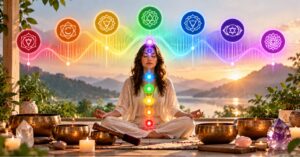
Sound healing is based on the theory that everything in the Universe, including our bodies, organs, and cells, produces its own frequency. Stress, disease, and various other emotional factors can cause our vibrations to become imbalanced. Using various sound healing instruments practices such as Tibetan singing bowls, crystal bowls, gongs, and more can help bring the body back into balance. Sound therapy allows you to relax deeply and promotes healing of the body on a cellular level while opening you up to spiritual enlightenment.
Understanding Sound Healing and Its Therapeutic Benefits
The science behind sound healing is rooted in the concept of cymatics, the study of visible sound vibration and the understanding that our bodies are composed primarily of water, which is an excellent conductor of sound waves. When specific frequencies are applied through sound healing instruments meditation, they penetrate deep into our tissues, organs, and energy systems, creating measurable physiological changes. Research has shown that sound therapy can reduce cortisol levels, lower blood pressure, improve sleep quality, and enhance overall wellbeing.
Traditional healing systems like Ayurveda and Tibetan medicine have long recognized the therapeutic power of sound. In these ancient traditions, specific sounds and mantras are prescribed for particular ailments, much like herbal medicines. The practice integrates seamlessly with other holistic modalities, making it an ideal complement to yoga, meditation, and mindfulness practices. For practitioners seeking to deepen their understanding or professionals wanting to add this powerful tool to their healing repertoire, specialized training is essential.
Top 10 Sound Healing Therapy Courses in Rishikesh 2026
1. Five Elements Sound Healing Certification
One of the most thorough sound healing therapy training in Rishikesh is provided by Five Elements. They understand that when we learn to heal ourselves and others on all levels (physical, emotional, mental and spiritual), true transformation can happen. Their courses go into depth about the relationship between sounds/frequencies and the five elements found in nature (earth, water, fire, air, and ether). Students learn how to apply these principals when working with others therapeutically.
Five Elements has you learning with many different sound healing instruments and meditation tools such as Tibetan bowls, crystal singing bowls, gongs, chimes, and voice. Their 50 hours sound healing courses draw from centuries-old practices preserved in Tibetan monasteries, offering an authentic immersion into this sacred art. I absolutely love that their program dives into the connection of sound healing with yoga philosophy, Ayurveda, and energy anatomy. Not only will you leave this program knowing how to work with the tools, but you will also understand how to bring true transformation to your clients.
2. Himalayan Sound Healing Academy
Located in the peaceful Tapovan area, the Himalayan Sound Healing Academy specializes in Tibetan singing bowl therapy and ancient Himalayan healing traditions. The program includes extensive training in selecting, playing, and maintaining various types of bowls, understanding the metallurgical composition and its effects, and applying specific techniques for different therapeutic outcomes.
The academy maintains small class sizes to ensure personalized attention, and students benefit from the guidance of Tibetan lamas and experienced sound healers. The curriculum covers chakra balancing, aura cleansing, stress reduction protocols, and working with specific health conditions. Participants also learn the traditional rituals and intentions that accompany sound healing practices in Tibetan culture, adding depth and authenticity to their practice.
3. Samyak Yoga Sound Healing Program
Samyak Yoga has established itself as a leader in comprehensive wellness education, and their sound healing program reflects this commitment to excellence. Their approach integrates sound therapy with yogic science, creating a powerful synergy that addresses healing on multiple levels. The training covers both ancient mantra therapy and modern sound healing modalities, giving students a versatile toolkit for their practice.
The curriculum includes detailed study of nada yoga (the yoga of sound), pranayama techniques that enhance sound healing effectiveness, and meditation practices that deepen the practitioner’s connection to vibrational frequencies. Students gain hands-on experience with various instruments while developing their vocal skills for toning and mantra chanting.
4. Parmarth Niketan Sound Therapy Training
As one of Rishikesh’s largest ashrams, Parmarth Niketan offers sound therapy training within a deeply spiritual context. Their program emphasizes the sacred dimensions of sound, exploring how vibration and frequency are fundamental to creation itself. Students learn in an environment filled with daily spiritual practices, Ganga aarti ceremonies, and access to renowned spiritual teachers.
The sound healing curriculum focuses primarily on mantra science, vedic chanting, and the therapeutic use of sacred sounds from Hindu tradition. This program is particularly valuable for those interested in the spiritual and devotional aspects of sound healing, though it also covers practical applications for stress relief, meditation enhancement, and energy balancing.
5. Akshi Yogashala Vibrational Healing Course
Akshi Yogashala’s approach to sound healing emphasizes the scientific principles underlying vibrational therapy while honoring traditional practices. Their training includes study of:
- Acoustic physics and how sound waves interact with the human body
- Frequency therapy and specific Hz applications for healing
- Crystal singing bowl mastery and chakra correspondence
- Gong therapy techniques for deep transformation
- Integration of sound with yoga nidra and guided meditation
The program attracts students interested in a more analytical understanding of how and why sound healing works, supported by current research in neuroscience, psychology, and complementary medicine.
6. Rishi Niketan Sound and Silence Retreat
This unique program combines intensive sound healing training with extended silent retreat periods, recognizing that silence is as important as sound in the healing journey. Students learn that therapeutic sound emerges from deep stillness, and the most powerful healing occurs in the space between sounds. The curriculum covers sound healing instruments and meditation across various traditions while emphasizing the practitioner’s inner development.
Training includes working with Himalayan bowls, therapeutic gongs, ocean drums, rain sticks, and other nature-inspired instruments.
7. Vedansha Institute of Vedic Science and Alternative Medicine
Vedansha offers a clinically-oriented sound healing program that prepares graduates to work in therapeutic settings, wellness centers, and integrative health facilities. Their training emphasizes evidence-based applications of sound therapy for specific conditions including anxiety, depression, chronic pain, insomnia, and PTSD. The curriculum integrates sound healing with other modalities like aromatherapy, color therapy, and energy healing.
Students receive training in intake procedures, assessment methods, treatment planning, and documentation appropriate for clinical environments. The program also addresses contraindications, safety protocols, and how to adapt sessions for different populations including children, elderly clients, and those with special needs.
8. Maa Yoga Ashram Sacred Sound Immersion
Maa Yoga Ashram’s program emphasizes the divine feminine aspects of sound healing and the nurturing, receptive qualities of this practice. Their training explores how sound can facilitate emotional release, trauma healing, and the restoration of inner peace. The curriculum includes extensive work with voice as a healing instrument, including toning, overtone singing, and therapeutic vocal expression.
Students learn to create safe, sacred spaces for healing work and develop skills in holding compassionate presence for others during vulnerable healing processes. The program incorporates elements of music therapy, expressive arts, and somatic practices, creating a rich tapestry of healing modalities.
9. Swasti Yoga Center Integral Sound Healing
Swasti’s approach integrates sound healing with their comprehensive understanding of subtle energy anatomy. Students learn how different frequencies affect the koshas (energy sheaths), nadis (energy channels), and chakras (energy centers). The training provides deep knowledge of how to use sound healing instruments meditation to clear energetic blockages, balance the doshas according to Ayurvedic principles, and support kundalini awakening safely.
The program includes training with traditional instruments like the tanpura, harmonium, and various drums alongside more commonly used bowls and gongs. Students also learn to combine sound healing with breathwork, mudras, and visualization techniques for enhanced therapeutic effects.
10. Yoga Vini Sound Healing and Music Therapy
Yoga Vini’s program bridges traditional sound healing with contemporary music therapy approaches. Their training covers both the intuitive, energetic aspects of working with sound and the structured, clinical applications recognized in modern healthcare. Students learn to assess clients, design treatment protocols, measure outcomes, and maintain professional standards consistent with international music therapy practices.
The curriculum includes training in receptive music therapy (using pre-composed or improvised music to evoke responses), active music therapy (engaging clients in sound-making), and integrated approaches combining both.
How The Five Elements Guides Your Sound Healing Journey
The decision to study sound healing should be made based on your personal desires, learning style, and vibration. At Five Elements, we walk with you every step of the way. Whether you are just getting interested in sound healing or you’re looking to become a master healer. We know everyone has something to teach us and different intentions when diving into sound. Our teachers provide one on one attention to help you grow as a practitioner while holding you to high expectations.
Additionally, there is always a chance to continue learning and working with sounds at The Five Elements. Not only will you be connected with the whole healing community of Rishikesh but also you will have the opportunity to continue learning about different healing modalities. Our students are encouraged to continue practicing on themselves so they can be healed by sound before healing others.
Preparing for Your Sound Healing Training
Preparation for sound healing therapy training should begin both externally and internally. Get your body in listening mode by practicing deep listening exercises with sounds you find in nature, music and even silence. The more you tune your ear to listening, the more you will notice subtle changes in frequency and their impact. Try attending a sound healing therapy session before your course so you can experience what it is like to receive.
Essential preparations include:
- Establishing a regular meditation practice to develop present-moment awareness
- Journaling about your intentions and what draws you to sound healing
- Reading foundational texts on sound therapy, vibrational medicine, and energy healing
- Clearing your schedule to be fully present during the intensive training period
- Arranging accommodation near your training center to minimize travel stress
Conclusion
Sound healing is an ancient practice that can help you transform yourself and others. If you’re interested in learning how to use sound to heal, why not study in Rishikesh? There are many qualified teachers who come from a real lineage. Rishikesh also has all the sacred energy you need to learn sound healing. And did we mention that you can get high-quality training at an affordable price? Here are a few things to consider when searching for sound healing training in Rishikesh. Decide if you want to learn sound healing as a career or as a self-practice. Some schools offer training for both professions as well as personal development.
Whatever you decide, follow your intuition. Sound healing is a powerful tool that can help you heal yourself and others. By learning how to use sound vibrations and frequencies, you are opening yourself up to be of service to others instrument meditation and sound therapy training. We wish you the best of luck on your journey!
Frequently Asked Questions
Q: Do I need musical training or experience to learn sound healing?
No prior musical training is necessary. While musical background can be helpful, sound healing focuses more on intention, presence, and energetic awareness than technical musical skill. Most programs teach everything needed from the beginning, and many successful sound healers come from non-musical backgrounds.
Q: How long does it take to become proficient in sound healing?
Basic proficiency can be developed through intensive certification programs, but mastery requires ongoing practice and experience. Most practitioners recommend at least 50-100 hours of personal practice and facilitating sessions for others before working professionally. Continuing education and regular practice are essential for deepening skills over time.
Q: Can sound healing be practiced alongside other healing modalities?
Absolutely. Sound healing integrates beautifully with yoga, massage, energy healing, counseling, and other therapeutic practices. Many practitioners find it enhances their existing work and offers new dimensions for supporting clients. The non-invasive nature of sound therapy makes it compatible with most other healing approaches.
Q: What is the investment required for sound healing training and instruments?
Course fees in Rishikesh typically range from $500-$1500 for comprehensive programs, which is considerably more affordable than similar training in Western countries. Quality instruments can range from $50 for basic items to several thousand dollars for professional-grade crystal bowls or gongs, though many practitioners begin with modest investments and expand their collection over time.
Q: Is sound healing recognized as a legitimate therapeutic practice?
While regulation varies by country, sound healing is increasingly recognized in integrative and complementary medicine circles. Research supporting its effectiveness continues to grow, and many insurance companies now cover sound therapy when provided by licensed healthcare practitioners. Professional associations and certification standards are developing to establish consistency and credibility within the field.