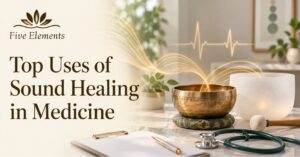
Everything in the brain from alpha waves to serotonin functions at different frequencies. When certain frequencies are applied to the brain via sound waves, the brain will entrain to those frequencies, neural networks will reorganize, and mental focus will improve. Sound frequency healing for health has been around since the beginning of time as a traditional healing modality, and now we have scientific research backing this form of medicine. Sound healing allows the brain to function at its optimal level which leads to better mental health.
Sound healing effects the entire brain rather than just one section like many medicines do. It also triggers the body’s natural healing abilities. Ancient civilizations used chanting, drums, flutes and shamanic healing to create frequency-specific sounds that promoted physical and emotional healing.
We have Buddha bowls, Himalayan singing bowls, tuning forks, crystal bows, Shamanic drumming, and many different meditation techniques.
Understanding How Sound Affects the Brain
Before we jump into why sound healing works lets talk about HOW it works. Each state of consciousness our brain enters produces unique frequencies we call brainwaves. Delta waves when we are in deep sleep. Theta waves when we meditate. Alpha waves when we are relaxed. Beta waves when we are actively thinking. Gamma waves when we are in peak perception. When we introduce certain sounds into the environment our brain experiences what is called “entrainment”. Neurons begin to fire at the same frequency as the rhythm they are sensing.
Sound healing isn’t voodoo. You can measure it in your brain. Doctors have used EEG’s to prove how sound vibrations can alter our brain wave state, manipulate neurotransmitters, and even promote neuroplasticity. When you sound the vagus nerve, which connects your brain to other large organs in your body, you open the gateway to internal and physical healing.
Top 10 Benefits of Sound Healing for Your Brain
1. Enhanced Neuroplasticity and Cognitive Flexibility
Sound healing therapy actively promotes neuroplasticity, the brain’s ability to form new neural connections and reorganize existing pathways. When you engage with sound healing instruments meditation sessions, particularly those incorporating varied frequencies and harmonic patterns, your brain is challenged to process complex auditory information. This stimulation encourages the formation of new synapses and strengthens existing neural networks.
Studies on musicians have shown that regular exposure to complex sound patterns increases grey matter density in areas responsible for auditory processing, motor control, and spatial coordination. While you don’t need to be a musician to benefit, regular sound healing sessions create similar neural enrichment. The brain essentially “exercises” as it processes these intricate vibrations, leading to improved memory formation, faster information processing, and greater cognitive adaptability as we age.
2. Reduction in Stress Hormones and Anxiety
Chronic stress floods the brain with cortisol, damaging the hippocampus and impairing memory formation. Sound frequency healing sessions have been shown to significantly reduce cortisol levels while simultaneously increasing the production of endorphins and serotonin. The low-frequency sounds from instruments like gongs and Tibetan bowls activate the parasympathetic nervous system, triggering the body’s natural relaxation response.
When your brain shifts from a beta wave state (alert, sometimes anxious) to alpha or theta states during sound therapy, the amygdala—your brain’s fear center—becomes less reactive. This creates a measurable decrease in anxiety symptoms that often persists long after the session ends. Regular practitioners report feeling more emotionally resilient and better equipped to handle daily stressors.
3. Improved Sleep Quality and Circadian Rhythm Regulation
Sleep has a complicated effect on brain function as it utilizes many neurotransmitters and hormones as well as timers to fully initiate. Sound healing therapy for sleep utilizes tools to help reset the brain’s production of melatonin along with promoting healthy sleeping cycles. Delta waves used during sleep induction are usually played from instruments such as crystal singing bowls that are tuned to lower octave frequencies. These sounds help guide your brain into the necessary levels of deep sleep for physical recovery and memory formation.
If you suffer from insomnia, you may notice that using sound healing before bed helps you fall asleep quicker and wake up less throughout the night. Your brain begins to condition to these sounds and associate them with sleeping.
4. Enhanced Focus and Mental Clarity
In our distraction-filled modern world, maintaining sustained attention has become increasingly challenging. Sound healing instruments meditation practices help train the brain to filter out irrelevant stimuli and maintain focus on a single point of awareness. When you listen to repetitive, harmonious sounds, the prefrontal cortex, responsible for executive functions like planning and decision-making, receives consistent, non-threatening stimulation that enhances its functioning.
The result is improved concentration that extends beyond the healing session itself. Regular practitioners often notice they can work more efficiently, retain information more effectively, and experience fewer instances of mental fog or scattered thinking throughout their day.
5. Pain Perception Modification and Reduced Inflammation
Pain is ultimately a brain phenomenon, it’s how our nervous system interprets signals from the body. Sound frequency healing can actually alter pain perception by influencing how the brain processes these signals. Certain frequencies stimulate the release of natural opioids like endorphins and enkephalins, which bind to pain receptors and reduce discomfort without the side effects of pharmaceutical interventions.
Additionally, research suggests that specific sound vibrations can reduce inflammatory markers in the body by influencing cellular behavior and gene expression. When the brain receives fewer pain signals and experiences reduced inflammation, it can redirect energy toward healing and restoration rather than constantly managing discomfort.
6. Emotional Processing and Trauma Release
Traumatic memories/emotions get “stuck” in our nervous system and cause repeated patterns of dysregulation. Sound healing therapy provides a container to process emotions. When listening to frequencies your limbic system is stimulated without being threatened. Talk therapy accesses our limbic brain through cognitive (talk) analysis.
Vibrational medicine accesses your emotions without needing to “talk” about it. Many healers have noticed feelings of release during sessions that they may not have been aware of. This happens because frequencies can bypass the cognitive brain and access implicit memories in the body and brain allowing for integration and release without thought. Your brain gives itself permission to let go of what no longer serves.
7. Balanced Hemispheric Function
The left and right hemispheres of the brain process information differently, the left handles language, logic, and linear thinking, while the right manages creativity, intuition, and holistic perception. Modern life often overemphasizes left-brain activities, creating imbalance. Sound healing instruments meditation, particularly when using binaural beats or instruments that create complex harmonic patterns, promotes communication between hemispheres through the corpus callosum.
This hemispheric synchronization leads to whole-brain functioning, where logical and creative capacities work in harmony. People often report enhanced problem-solving abilities, creative insights, and a greater sense of inner coherence after establishing a regular sound healing practice.
8. Increased Production of Beneficial Brain Chemicals
Beyond just reducing stress hormones, sound frequency healing actively promotes the production of neurotransmitters and neurochemicals essential for mental health:
- Dopamine: Associated with motivation, pleasure, and reward
- Serotonin: Regulates mood, sleep, and appetite
- Oxytocin: Promotes bonding, trust, and emotional connection
- Endorphins: Natural pain relievers and mood elevators
- Nitric oxide: Improves blood flow to the brain, supporting cognitive function
These neurochemical changes don’t just make you feel better temporarily, they create sustainable shifts in brain function that support long-term mental wellness.
9. Enhanced Meditative States and Spiritual Connection
Meditation can be extremely rewarding but many of us find it difficult. Sound healing therapy helps keep your attention focused so even novice meditators can find it easier to slip into those meditative states. The brain is attracted to rhythm, when given a continuous set of harmonic sounds the brain can more easily slip into theta wave states of meditation.
Not only are these states relaxing they are where the brain integrates our experiences, stores memories and makes creative links. The more often you can access these states through sound healing the further you will progress in your personal journey and feel more meaning and fulfillment.
10. Improved Auditory Processing and Sensory Integration
The auditory cortex doesn’t function in isolation, it’s intimately connected with areas responsible for language, memory, emotion, and even motor control. Regular exposure to complex harmonic sounds through sound healing instruments meditation strengthens these neural networks, improving overall sensory integration. This is particularly beneficial for individuals with sensory processing challenges, auditory processing disorders, or those recovering from neurological conditions.
Enhanced auditory processing also supports better communication skills, musical appreciation, and the ability to detect subtle changes in the environment, capacities that enrich daily life in numerous ways.
Key Practices to Maximize Brain Benefits from Sound Healing
Getting the most from sound healing therapy for health requires intention and consistency. Consider these evidence-based approaches:
Creating the Optimal Environment:
- Choose a quiet space where you won’t be disturbed
- Ensure comfortable temperature and minimal visual distractions
- Use cushions or blankets to support physical relaxation
- Dim lighting helps the brain transition into receptive states
- Turn off electronic devices to minimize electromagnetic interference
Establishing a Regular Practice:
- Consistency matters more than session length even 15 minutes daily creates benefits
- Morning sessions can set a positive tone for the entire day
- Evening sessions support better sleep and dream states
- Track your experiences in a journal to notice patterns and progress
- Be patient with the process, neuroplastic changes develop over weeks and months
How Specialized Centers Support Your Sound Healing Journey
Of course you can practice on your own and still see benefits, but learning or working with others who have more experience can catapult your healing. Places like The Five Elements provide group learning opportunities for those who wish to gain a broader scope of sound healing therapy. Training centres like this have access to many different sound healing tools beyond what most would have in their own collection. Whether you are looking to hear ones you’ve never heard like antique Tibetan bowls or accurately tuned tuning fork.
Why a healing centre is better. Many healing centres take ancient practices and infuse them with today’s knowledge of neuroscience and healing. They study how sound healing works in the past, present and apply it to how we know the body and mind works today. This allows you to get the real experience of how it was done hundreds of years ago and how it can work best for you today.
Learning centres also allow you to learn how to do it on your own. If you take the time to learn how to correctly use the tools and meditate through a 24 hours sound healing course or weekend workshop you can learn how to heal yourself. Plus it gives you a better understanding and respect for the art of sound healing.
Conclusion: Embracing Vibrational Medicine for Brain Optimization
Science is finally validating what sound healers have understood for thousands of years—that sound has a profound impact on the brain. The previous 10 benefits listed are just a few examples of what happens to our brain when we work with healing vibrations intentionally. Benefits range from increasing plasticity to decreasing cortisol levels and everything in between. Sound healing therapy for brain health is a holistic and powerful way to support your brain.
Keep in mind as you embark on this journey with sound healing instruments meditation that your brain is changing every time you use sound as a tool for healing. Your neurons are firing new connections, your brain is releasing different chemicals, and you are expanding your consciousness. You are remembering your truth that you are made of vibrations and sound. By holding space for that truth and working with sound, you are allowing your brain to operate at its optimal level.
Frequently Asked Questions
Q: How quickly can I expect to notice benefits from sound healing therapy for my brain?
A: Many people report immediate effects such as relaxation and mental clarity after their first session. However, deeper neurological benefits like improved memory, enhanced focus, and lasting anxiety reduction typically develop over 4-6 weeks of consistent practice.
Q: Can sound frequency healing replace medical treatment for neurological conditions?
A: Sound healing should be viewed as a complementary therapy that supports overall brain health and wellbeing, not a replacement for medical treatment. Always consult healthcare professionals for serious neurological concerns. Sound therapy works best when integrated into a comprehensive wellness approach that may include conventional medicine, nutrition, exercise, and other modalities.
Q: What’s the difference between listening to music and participating in sound healing instruments meditation?
A: While music can certainly affect mood and cognition, sound healing uses specific frequencies, intervals, and vibrations intentionally designed to create therapeutic effects. The instruments produce overtones and harmonic patterns that don’t exist in most conventional music, and sessions are structured to guide the brain through specific states.
Q: Are there any risks or contraindications for sound healing therapy?
A: Sound healing is generally very safe, but individuals with sound sensitivity, epilepsy triggered by auditory stimuli, severe mental health conditions, or pacemakers should consult healthcare providers before participating. Pregnant women should inform practitioners, as certain frequencies and volumes may not be appropriate.
Q: How do I choose quality sound healing instruments for personal practice?
A: Look for instruments made from high-quality materials with clear, sustained tones and rich overtones. Singing bowls should be hand-hammered rather than machine-made when possible. Tuning forks should be precisely calibrated to specific frequencies. Starting with one or two quality instruments is better than collecting many inferior ones.