One day a woman sat across from me and said, “I’m so tired, but the minute I hit my head on my pillow, my brain becomes a control room. Lights flashing. Alarms going off. All those half-finished conversations from the day playing over and over.
If this sounds like something you know, you are not broken, you are not alone. There are millions of tired but wired people going to bed. I’ve seen people try just about everything over the years: white noise apps, weighted blankets, melatonin gummies bought in bulk. A part of it does help a little. But one of the simplest tools I’ve seen work, time and time again, is something you can hold in the palm of your hand: a tuning fork.
This is no gimmick. It’s a small metal instrument with a long history in music, medicine and sound therapy, and a growing body of interest in its role in calming the body before sleep. Let’s talk about the real benefits of tuning forks, how they work, and how you can actually use one tonight.
What Is Tuning Fork Therapy?
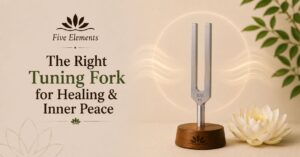
A tuning fork is a metal instrument with two prongs that, when struck, produces a single, steady tone. For over two hundred years musicians have used them to tune instruments. Today, doctors still use them to test hearing and nerve function.
In sound therapy, practitioners strike the fork and hold it up to the ear or place the vibrating stem directly on the body, often on the chest, collarbone, feet or spine. Chakra Weighted Tuning Forks can also be used in similar practices. The person hears the tone, but that’s not all. They sense it moving through bone and tissue. It’s that mix of sound and touch that makes tuning fork work different from just listening to music or a meditation app.
The Science Behind Sound and a Calmer Body
You don’t have to take my word for it. Scientists have studied the impact of vibration and low frequency sound on the nervous system, especially near sleep . In a 2020 study published in the journal Sleep Disorders, researchers used functional MRI scans to observe people with insomnia before and after a month of vibroacoustic stimulation. The researchers observed statistically significant changes in brain connectivity, as well as improvements in sleep duration and sleep quality (Shinba et al., “An fMRI Study of the Effects of Vibroacoustic Stimulation on Functional Connectivity in Patients with Insomnia,” National Center for Biotechnology Information, 2020).
Additionally, the National Center for Complementary and Integrative Health, a part of the U.S. National Institutes of Health, notes that practicing relaxation techniques on a regular basis, including those that focus on rhythm, breath, and sensory input, can help to relieve physical and emotional tension (National Center for Complementary and Integrative Health, “Relaxation Techniques for Health,” NIH, updated 2021).
This is not to say that a tuning fork is a cure for a sleep disorder. But it does mean that the idea behind it, using steady, predictable vibration to move the body out of “alert mode,” is based on more than tradition. This depends on how our nervous system really reacts to sound and touch.
10 Benefits of Tuning Forks for Sleep and Relaxation
Here is why so many people, from yoga teachers to nurses to tired parents, keep a tuning fork on their nightstand.
- They help settle an overactive nervous system: Low, steady vibration placed on the chest or collarbone is often used to gently engage the vagus nerve, the main pathway of your parasympathetic (rest and digest) system. When that pathway gets support, heart rate tends to slow and breathing tends to deepen.
- They quiet racing thoughts: Instead of scrolling your phone or reviewing tomorrow’s to-do list, focusing on one long, clear tone gives your mind something simple to follow. Attention has to go somewhere. A tuning fork gives it a soft place to land.
- They release physical tension: Tight shoulders, a clenched jaw, a stomach in knots. Vibration applied directly to these areas can help loosen the grip that stress leaves on the body, similar to how a gentle massage works, just through sound instead of pressure.
- They give you a real bedtime ritual: Sleep experts consistently point to the value of a consistent, calming pre-sleep routine. Striking a fork, listening, and placing it on the body takes two to five minutes and turns into a signal your body learns to recognize: it’s time to wind down.
- They’re drug-free and non-invasive. There’s nothing to swallow, nothing to become dependent on, and no next-day grogginess. For people who are cautious about sleep medication or supplements, this matters.
- They’re simple enough for anyone to use: You don’t need training or a background in sound healing. Strike the fork against a soft surface, bring it close to your ear or body, and breathe. That’s it.
- They support slower, deeper breathing: As the nervous system settles, breathing naturally follows. Slower breath is directly linked to lower stress hormone levels and a calmer state overall.
- They can help you fall back asleep after waking: Waking at 3 a.m. and staring at the ceiling is one of the most frustrating parts of poor sleep. Keeping a fork within reach gives you something to do besides checking your phone, which only makes it harder to drift off again.
- They pair naturally with breathwork, yoga, and meditation: If you already have a wind-down practice, a tuning fork adds a sensory layer to it. Many people use one at the start or end of a short meditation or gentle stretching session.
- They build a longer-term sense of calm: Used consistently, not just on the worst nights, tuning fork practice tends to become part of how a person regulates stress overall. It’s less about one dramatic result and more about small, repeated moments of settling down.
How to Use a Tuning Fork Before Bed
- Sit or lie down somewhere quiet, about ten to fifteen minutes before you plan to sleep.
- Strike the fork gently against a rubber mallet, your palm, or a soft surface. Avoid hard surfaces, which can damage the fork.
- Bring it close to one ear, then the other, and simply listen for ten to fifteen seconds.
- Place the base of the fork on your chest, collarbone, or the soles of your feet while it’s still vibrating.
- Close your eyes and breathe slowly, letting the tone fade out completely before you strike it again.
- Repeat two or three times, then lie back and let your body settle into sleep.
Choosing the Right Tuning Fork
Not all forks are built the same, and the type you choose depends on what you’re after.
- Weighted forks vibrate longer and deliver a stronger, deeper sensation when placed on the body. These are often preferred for physical tension and grounding.
- Unweighted forks produce a clearer, brighter tone and are better suited for listening near the ears or for chakra-focused practice.
At Five Elements, both weighted and unweighted 7 chakra tuning forks are part of the instrument collection, alongside singing bowls and other sound tools used in their sound healing programs. If you’re new to this, starting with one well-made fork and learning to use it consistently will teach you more than owning an entire set you rarely touch.
A Gentle Word of Caution
Tuning forks are a supportive tool, not a replacement for medical care. If you’re dealing with chronic insomnia, an anxiety disorder, or another ongoing health condition, talk with a doctor or licensed therapist. Sound-based practices work well alongside proper treatment, not instead of it.
Final Thought
Sleep problems are rarely caused by one thing, and there is no one fix that works for everyone. But the benefits of tuning forks, a calmer nervous system, quieter thoughts, and a simple ritual your body can count on, make them worth a try for anyone looking for a gentle, natural way to unwind. This is exactly the kind of practical, evidence-informed approach that Five Elements has built its sound healing programs around, so people have a real place to learn and practice, not just a product to buy.
Frequently Asked Questions
Do tuning forks actually help with sleep, or is it placebo?
Research on vibroacoustic stimulation shows measurable changes in brain connectivity and sleep quality in people with insomnia. Results vary by person, but the underlying mechanism, calming the nervous system through vibration, is grounded in real physiology.
What frequency tuning fork is best for relaxation?
Lower frequencies, generally under 300 Hz, are most commonly used for relaxation because they produce longer, deeper vibrations. Many beginners start with a 128 Hz or similar low-frequency weighted fork.
How often should I use a tuning fork before bed?
Most people notice the biggest difference with daily or near-daily use over a few weeks, similar to any relaxation practice. Occasional use can still help on especially stressful nights.
Can I use a tuning fork if I’m already taking sleep medication?
Yes, in most cases, since it’s a non-invasive sound practice rather than a substance. Still, mention it to your doctor if you have a diagnosed sleep disorder so your full routine is on record.
Is there a difference between weighted and unweighted tuning forks for sleep?
Weighted forks vibrate longer and are usually better for placing directly on the body, which many people find more calming before bed. Unweighted forks work well for listening rather than body placement.