One year, a man came to a sound session with three different tuning forks he bought off the internet. None of them seemed right, he said. He’d read one frequency was for DNA repair, another for chakra alignment, another for grounding, and wound up more confused than calm. We sat down, stripped away the noise and started with one simple question, what do you need right now, rest or release?
That question is more important than any number on a fork. If you are searching for the right tuning fork for healing and inner peace, you are not alone in feeling overwhelmed by the choices. Let’s take a step back and walk thru what these instruments actually do, which ones practitioners lean on the most, and how to pick one that fits where you are, not just what a product page promises.
What Tuning Fork Healing Actually Involves
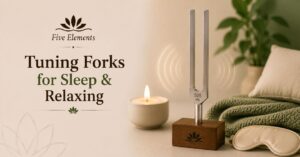
If you hit a tuning fork it emits one pure constant tone. In sound therapy, that tone is either held close to the ear or applied directly to the body, often at the chest, feet or along the spine. The sound and the physical vibration combine and separate part of the reason people describe the experience as something felt as much as heard. A sound therapy singing bowl chakra practice may similarly use resonant tones and vibrations as part of a relaxing experience.
These sound-based practices are looked upon as complementary approaches to wellness, as defined by the National Center for Complementary and Integrative Health (NCCIH) in the U.S. National Institutes of Health. Research on energy-based claims continues, but the agency says relaxation-based techniques may be very helpful in reducing stress and physical tension when practiced regularly (National Center for Complementary and Integrative Health, “Relaxation Techniques for Health,” NIH, updated 2021).
There’s also some promising early clinical interest here. A study of the feasibility of biofield-based sound therapy delivered virtually to people with generalized anxiety disorder found clinically meaningful reductions in anxiety following the sessions (“Sound Healing Reduces Generalized Anxiety During the Pandemic: A Feasibility Study,” Complementary Therapies in Medicine, ScienceDirect, 2023). It’s a small study, and the researchers themselves call for larger trials, but it’s honest evidence that this kind of work deserves more attention than it gets.
Let’s get clear: many of the exact frequency claims you’ll read about on the web, that a single number heals DNA or cleans a chakra, come from traditional and practitioner-based frameworks, not controlled clinical trials. This does not make the practice valueless. It means the fairest way to consider it is as a supportive ritual, one that many people find genuinely calming, along with proper medical care when needed.
Which Tuning Fork Is Good for Healing and Inner Peace
Here’s a breakdown of the most commonly used forks and what practitioners typically use each one for.
128 Hz (Weighted, Otto tuner)
This is often the starting point for physical relaxation. The weighted base holds the vibration longer, so when it’s placed on the sternum, feet, or joints, the sensation travels deeply through soft tissue and bone. Many people use it simply to unwind a tense body before anything else.
136.1 Hz (The “OM” or Earth frequency)
Calculated from Earth’s orbital period, this tone has become closely associated with heart-centered meditation in yoga and sound healing traditions. It’s frequently placed near the chest and used at the start of a session to settle the body before deeper work begins.
256 Hz (Middle C)
A clear, bright unweighted tone is often used near the ears rather than on the body. Practitioners describe it as useful for mental clarity, especially when a busy or scattered mind is the main obstacle to feeling at peace.
432 Hz
Popular for its association with a naturally calming, less tense quality compared to standard tuning. It’s commonly used during meditation or breathwork, held near the ears or heart space.
528 Hz (Solfeggio “Love” frequency)
One of the most talked-about frequencies in sound healing circles, associated with emotional release and heart opening. Claims about cellular or DNA-level effects remain unproven scientifically, but as a tool for emotional grounding during a session, it’s widely used and well loved.
7 Chakra Sets (Weighted or Unweighted)
Rather than one fork, this is a full set tuned to the traditional seven chakra points, from root to crown. These are especially useful for anyone doing a full-body practice rather than targeting one specific concern. Five Elements offers both weighted and unweighted versions of the 7 chakra tuning fork set, giving practitioners and beginners a choice between deeper physical vibration and clearer tonal listening depending on their goal.
How to Choose the Right One for You
- Start with your main goal. Physical tension points you toward weighted, low-frequency forks. Mental clutter points you toward clearer, higher tones like 256 Hz.
- If you’re new to this, begin with one fork, not a full set. Learning how one tone feels in your body teaches you more than owning five you rarely use.
- Weighted versus unweighted matters. Weighted forks vibrate longer and are built for body placement. Unweighted forks ring clearer and are better suited for listening near the ears.
- Let your response guide you, not just the label. A frequency that’s supposed to be calming but leaves you tense isn’t the right fit for you right now, regardless of what a chart says.
- Pair it with breath. Whatever fork you choose, slow, steady breathing while the tone plays does much of the actual calming work.
A Simple Practice for Inner Peace
Sit somewhere quiet. Strike the fork gently against a soft surface or a rubber activator, never a hard one. Bring it close to one ear, then the other, for about ten seconds each. Then place the base on your chest or the soles of your feet while the tone is still ringing. Close your eyes, breathe slowly, and let the sound fade completely before you strike it again. Two or three rounds is often enough to feel a real shift.
A Gentle Word of Caution
Tuning fork practice is a supportive tool, not a substitute for medical or psychiatric care. If you’re managing a diagnosed condition, chronic pain, anxiety, or depression, please continue working with your doctor or therapist and treat sound work as something that complements that care, not something that replaces it.
Final Thought
There is not one tuning fork for healing and inner peace that works for everybody. Whether your body needs to release tension or your mind needs to settle, and sometimes it’s a bit of both. The right one depends. Five Elements teaches this type of frequency-specific practice as part of its sound healing certification programs, where students learn to work with tuning forks, singing bowls and other instruments under proper guidance as opposed to guesswork. If you want to learn more, their programs page details the full training path.
Frequently Asked Questions
Which tuning fork frequency is best for beginners?
The 136.1 Hz OM fork or a basic weighted 128 Hz fork are both good starting points. They’re gentle, widely used, and easy to understand without needing to learn a full chakra system first.
Can tuning forks really help with anxiety?
Early research, including a feasibility study on biofield-based sound therapy, shows promising reductions in anxiety symptoms. Results vary by person, and it works best alongside, not instead of, professional care.
What’s the difference between weighted and unweighted tuning forks?
Weighted forks vibrate longer and are made for placing directly on the body. Unweighted forks produce a clearer tone and are typically used near the ears rather than on the skin.
How often should I use a tuning fork for inner peace?
Daily or near-daily use for a few weeks tends to build the strongest sense of routine and calm, though even occasional use on a stressful day can help in the moment.
Is 528 Hz scientifically proven to heal the body?
Not in the clinical sense. Its association with emotional healing and heart opening comes mostly from sound healing tradition rather than controlled trials, though many people still find it genuinely calming to use.
Sound Healing Therapy: Benefits, Applications, Scientific Evidence, and Future Potential
Sound has been part of human healing, spiritual, and meditative traditions for centuries. From chanting and rhythmic drumming to singing bowls, gongs, and therapeutic music, different cultures have used sound to encourage relaxation and create a sense of physical and emotional balance. Today, these traditional practices are increasingly being examined through the lens of modern wellness and healthcare research.
Sound healing therapy generally involves the intentional use of sound, vibration, rhythm, or music to encourage relaxation and support mental and physical well-being. Common approaches include Tibetan or Himalayan singing bowls, gongs, chanting, humming, guided music, and other forms of acoustic stimulation. Although these approaches vary considerably, they share an important principle: sound can influence attention, emotional state, relaxation, and the way people experience their bodies.
Scientific interest in sound-based interventions has grown considerably. However, it is important to distinguish promising supportive benefits from claims of curing disease. Current evidence suggests that sound therapy may be particularly valuable as a complementary practice for relaxation, stress reduction, sleep support, emotional regulation, and subjective well-being. More rigorous research is still required to establish standard protocols and understand its long-term clinical effects.
How Does Sound Healing Therapy Work?
Sound is not only something we hear. It is produced by vibration and interacts with the auditory system, attention, emotions, and physical environment. During a sound healing session, instruments such as singing bowls and gongs create sustained tones, rhythmic patterns, and vibrations that may help shift attention away from stressful thoughts and toward the immediate sensory experience.
This can create an environment similar to meditation. Rather than continuously focusing on work, worries, pain, or other mental demands, participants are encouraged to listen and become aware of sound, breathing, and bodily sensations.
Relaxation is one of the most plausible explanations for many reported sound therapy benefits. When a person becomes calmer, muscular tension may decrease, breathing may become easier, and psychological distress may feel less intense. This does not necessarily mean that sound directly treats the underlying cause of a medical condition. Instead, it may influence how a person experiences stress, discomfort, and emotional strain.
Singing Bowls and Their Role in Sound Healing
Singing bowls are among the most widely recognised instruments associated with sound healing. When struck or played around their rim, they produce sustained tones and vibrations that can create an immersive acoustic experience.
Research into singing bowl meditation has reported encouraging psychological and physiological observations. Participants in some studies have reported improvements in mood, tension, relaxation, and general well-being. Systematic research has also begun examining the psychological and physiological effects of Tibetan singing bowl interventions.
One reason singing bowls may be particularly useful in relaxation settings is that they require very little physical effort from participants. A person can generally experience a session while sitting or lying comfortably. This makes the practice potentially accessible to people who may find physically demanding wellness activities difficult.
However, singing bowl interventions vary considerably. Different bowls produce different frequencies and intensities, practitioners use different techniques, and session lengths are not standardised. These differences make it difficult to establish one universal therapeutic protocol.
Gongs and Immersive Sound Experiences
Gongs are frequently used in sound baths because they create complex, resonant, and often powerful soundscapes. Their low-frequency components, reverberation, and broad spectrum of tones can create a deeply immersive listening experience.
In group sound sessions, gongs may contribute to a shared acoustic environment that encourages collective stillness and focused attention. Participants sometimes describe these sessions as deeply relaxing or emotionally releasing.
Despite their popularity, scientific research specifically investigating gongs remains relatively limited compared with research into broader music and sound interventions. Much of the available information surrounding gong therapy comes from practitioner experience, descriptive studies, and wellness literature.
Therefore, claims about gong healing should remain measured. Their potential for creating relaxation and an immersive meditative experience is plausible, but stronger controlled research is needed before specific clinical benefits can be established.
Sound Therapy for Stress, Anxiety, and Emotional Well-Being
Stress and anxiety are among the most common reasons people explore sound-based practices. Modern lifestyles can expose individuals to persistent work pressure, information overload, sleep disruption, and emotional demands. Relaxation practices can therefore play an important supportive role.
Sound therapy may help by creating a structured period in which attention is redirected away from stressful thoughts. Slow, calming, and predictable sounds may support emotional settling and help some participants feel grounded.
The journal also highlights the relationship between stress and physical comfort. When anxiety increases, physical discomfort can sometimes feel more intense. Conversely, relaxation may change the subjective experience of discomfort.
Sound therapy should not be considered a replacement for appropriate psychological or medical treatment. However, when used responsibly, it may complement meditation, breathing exercises, counselling, yoga, and other stress-management approaches.
Sound Healing and Sleep
Sleep is another promising area for sound-based interventions. Stress, mental overactivity, anxiety, and physical tension can make it difficult to fall asleep or maintain restful sleep.
A calming sound experience before bedtime may help some individuals transition from an alert state into a more relaxed one. Even modest improvements in sleep may influence mood, energy, and well-being the following day.
Sound-based approaches are particularly attractive for sleep support because they are non-pharmacological and relatively straightforward to incorporate into relaxation routines.
However, there is no single sound that can be assumed to improve sleep for everyone. Individual preferences, hearing sensitivity, volume, frequency, duration, and environmental conditions can all affect the experience. Further research is necessary to determine which sound interventions are most effective and which people are most likely to benefit.
Pain, Relaxation, and Body Awareness
Pain involves more than physical sensation. Emotional state, attention, fear, stress, and muscular tension can influence how pain is experienced.
Sound therapy may support people experiencing discomfort by promoting relaxation, redirecting attention, and helping reduce tension. Participants sometimes report feeling warmer, calmer, less tense, or more physically comfortable after sound sessions.
Importantly, feeling more comfortable does not necessarily mean that the underlying cause of pain has been treated. Sound healing should therefore be viewed as supportive rather than curative.
This distinction is particularly relevant in rehabilitation and supportive care. When a person feels calmer and sleeps better, they may feel more prepared to participate in recovery activities. Sound therapy may therefore contribute indirectly to comfort and engagement while conventional treatment addresses the underlying condition.
Potential Benefits for Older Adults
Older adults may experience sleep problems, loneliness, chronic discomfort, anxiety, depression, and stress. Because singing bowl sessions can usually be experienced while sitting or lying down, they may offer a relatively low-impact relaxation activity.
Research discussed in the journal indicates that at least one randomised trial found clinically relevant reductions in depression and anxiety among hospitalised older participants receiving singing bowl interventions.
Non-pharmacological supportive practices are particularly interesting in older populations because medication management can sometimes be complicated by multiple prescriptions, sedation, fall risk, and drug interactions.
Nevertheless, sound therapy for older adults requires individualisation. Hearing ability, cognitive status, mobility, hearing aids, and sensitivity to sound should all be considered. Excessively loud or intense sounds may be uncomfortable rather than relaxing.
Neurological Support and Mental Clarity
Researchers have also explored the neurological relevance of sound-based interventions. Sound may influence attention, relaxation, mood, and nervous system arousal. Some sound practices may encourage meditation-like states or help people reduce hyperactive stress responses.
For individuals living with neurological conditions, stress, poor sleep, fatigue, and mood changes can substantially affect quality of life. Sound therapy may therefore have value as a supportive practice even when it does not directly alter the underlying neurological disease.
For example, the journal discusses evidence suggesting that singing bowl sessions may improve anxiety and mood among some people with Parkinson’s disease. Some research has also explored binaural acoustic stimulation and reported possible improvements in tremor and mood-related symptoms.
Sound-based approaches have also been considered in rehabilitation contexts. Stroke recovery, for example, can involve fatigue, emotional strain, communication difficulties, and prolonged rehabilitation. Although direct research involving singing bowls and gongs remains limited, broader research into music and calming sounds suggests that relaxation may help some individuals engage more comfortably with rehabilitation.
Reports of improved “mental clarity” following sound sessions should also be interpreted carefully. A person who feels less stressed, sleeps better, and experiences reduced anxiety may naturally find it easier to concentrate. This does not necessarily mean that sound therapy directly increases intelligence or produces major cognitive changes.
Sound Therapy, PTSD, and Trauma
Trauma can involve hyperarousal, sleep disturbance, emotional dysregulation, and heightened sensitivity to environmental stimuli. Gentle sound interventions have therefore been explored as possible tools for relaxation and emotional regulation.
Music therapy, guided imagery, drumming, and other sound-based interventions may help some individuals feel more centred or contained. Creating a sense of psychological safety can be important when working with trauma.
However, this is also an area where caution is essential. Sound can be soothing for one person and distressing for another. Loud, unexpected, or intense sounds may trigger discomfort or heightened arousal.
Sound should therefore never be imposed on trauma-affected individuals. Consent, sensitivity, gradual exposure, appropriate volume, and participant control are essential.
Cardiovascular and Hospital Applications
Hospitals can be stressful environments filled with unfamiliar sounds, medical procedures, disrupted sleep, and anxiety. Researchers have therefore examined whether calming sound and music can contribute to a more supportive healthcare environment.
Studies discussed in the journal have reported outcomes such as reduced anxiety, lower cortisol, improved relaxation, and greater subjective comfort among some patients exposed to calming sound or music.
Music-based interventions have also been studied in relation to blood pressure. Research cited in the journal includes a pilot study in which an audio relaxation programme reduced systolic and diastolic blood pressure in older adults. A meta-analysis also reported reductions in blood pressure and heart rate associated with music therapy.
These findings suggest a possible supportive role in cardiovascular relaxation. They should not, however, be interpreted as evidence that sound therapy can replace medical management for hypertension or cardiovascular disease.
Tinnitus, Hyperacusis, and Sound Sensitivity
Sound therapy has also been applied in conditions involving sound perception and tolerance.
Tinnitus involves hearing sounds such as ringing or buzzing without an external source. Hyperacusis involves increased sensitivity to ordinary sounds, which may feel excessively loud or even painful.
Sound-based approaches in these conditions must be carefully controlled. In hyperacusis, sound exposure generally needs to be gradual rather than overwhelming. For tinnitus, relaxing sounds, humming, or other sound-based strategies may sometimes help reduce distress and make symptoms feel less disruptive.
Because these conditions directly involve auditory sensitivity, professional guidance and appropriate volume management are particularly important.
Sound Therapy in Cancer Support
Cancer treatment can involve substantial emotional and physical strain, including fatigue, anxiety, uncertainty, sleep problems, and changes in quality of life.
The journal discusses research in which sound interventions were associated with improvements in social functioning, fatigue, emotional well-being, and selected patient-reported outcomes.
This makes sound therapy potentially useful as part of supportive cancer care. Its role is not to treat cancer itself. Instead, carefully designed sound sessions may help create comfort, relaxation, and emotional support alongside appropriate oncology care.
Diabetes, Thyroid Disorders, and Other Conditions
Research has also explored sound and music interventions in other health contexts.
For thyroid-related care, the journal cites a randomised clinical trial in which listening to music during thyroid fine-needle aspiration biopsy reduced pain and anxiety. This provides evidence for the calming value of sound during a stressful medical procedure.
For people with type 2 diabetes, controlled studies reviewed in the journal suggest that music therapy may have potential benefits for relaxation and quality of life, although more research is necessary.
These examples reinforce an important distinction. The strongest argument for sound therapy in such conditions is currently its role in managing stress, anxiety, comfort, and quality of life rather than treating the underlying disease.
Safety and Contraindications
Although sound healing is generally considered a low-risk practice when performed responsibly, it is not automatically appropriate for everyone.
People with tinnitus, hyperacusis, migraines, severe anxiety, PTSD, vestibular problems, or certain neurological conditions may be more sensitive to intense sounds. Older adults, hospital patients, and people with neurodegenerative conditions may also require additional consideration.
Practitioners should pay attention to volume, duration, distance from instruments, individual comfort, and informed consent. Participants should be able to communicate discomfort and stop or modify a session when necessary.
A responsible sound healing practice should always be participant-centred rather than based on the assumption that stronger vibrations or louder sounds create greater therapeutic effects.
Limitations of Current Sound Healing Research
Despite promising findings, the scientific evidence surrounding sound healing still has significant limitations.
Many studies involve small participant groups. Sound instruments, frequencies, session duration, practitioner techniques, and treatment environments vary widely. This makes direct comparison between studies difficult.
Many reported outcomes are also subjective. Feelings such as calmness, relaxation, rejuvenation, or emotional release are meaningful, but they can be difficult to measure objectively. Expectations and placebo effects may also influence participant reports.
Another unanswered question concerns duration. Someone may feel substantially calmer immediately after one session, but researchers still need to determine how long the effect lasts and how frequently sessions should be provided.
Future studies should therefore use larger participant groups, clearer intervention protocols, longer follow-up periods, and objective physiological measurements.
The Future of Sound Healing Research
Future sound therapy research could combine participants’ subjective experiences with measurements such as heart rate variability, cortisol, sleep quality, blood pressure, and electroencephalography.
Researchers also need to document instruments, frequencies, sound levels, session duration, practitioner methods, and treatment environments more consistently.
Individualisation may become increasingly important. Some people may respond positively to singing bowls, while others may prefer gentle music, chanting, humming, or guided soundscapes.
Technology may further expand this field. Artificial intelligence-based music generation and personalised soundscapes could eventually make it possible to design auditory experiences according to individual relaxation patterns, preferences, and therapeutic goals.
Conclusion
Sound healing occupies an interesting space between ancient practice, modern wellness, and emerging scientific research. Singing bowls, gongs, therapeutic music, chanting, and related sound interventions may support relaxation, emotional regulation, sleep, stress management, physical comfort, and overall well-being.
Current evidence is encouraging but should be interpreted responsibly. Sound therapy is not a cure for neurological disease, cancer, diabetes, thyroid disorders, hypertension, chronic pain, or mental health conditions. Its most credible current role is as a complementary approach used alongside appropriate medical, psychological, rehabilitative, or wellness care.
The future of sound healing will depend on stronger research, better standardisation, appropriate safety practices, and honest communication about what sound can and cannot do. When used carefully, sound therapy may offer people a simple way to slow down, become more aware of their bodies and breathing, and create a greater sense of calm and presence.
As research continues, sound-based interventions may become better understood and more precisely integrated into wellness and supportive healthcare settings. Rather than making exaggerated healing claims, the strongest path forward is to recognise sound therapy for what current evidence most clearly supports: a promising, accessible, and non-invasive complementary practice for relaxation, comfort, and improved subjective well-being.