Think back to the last time sound instantly transported you into a feeling. The rolling waves crashing on the shore. The deep note of a temple bell at sunset. The resonant vibration of a gong as it purrs through your body. Centuries before sound healing found its way into the new-age wellness vernacular, ancient cultures around the world knew (and you experienced) what researchers are just beginning to uncover: sound can literally move you.
Here at Five Elements, we play with sound regularly, through singing bowls, gongs, guided sound baths and are often asked the same question: does this actually affect your body, or is it just a pleasant thing to do? The short answer is: yes. Sound bathing benefits is a legitimately relaxing experience. But what does that actually mean? Let’s dig into some of the science behind why a good sound bath can work wonders.
An Ancient Practice, Now Under a Scientific Lens
Sound healing is far from a new concept. Many ancient cultures including Egypt, Babylonia, India, China, Persia and regions across Africa and South America utilized chanting, bells, drums and bowls in prayer, healing ceremonies and meditation. Sound-based rituals were especially prominent in South Asian cultures. Rather than viewing sound as background noise, they were intentional about sound acting as a vehicle to connect body, mind, and spirit. Tantra translates to mean “to weave together”, with the repetition of sound/vibration and chant helping to weave the mind into a state of focus and stillness.
This ancient intuition is being fueled by modern day clinical interest. Hospitals, wellness centers and integrative medicine practices are diving into sound baths as a tool to help people unwind using Tibetan and Himalayan singing bowls, crystal bowls, tuning forks and gongs. It’s one of the easiest, non-pharmacological ways to help people relax. What was once explained through spiritual lingo (energy, healing, balance, harmony) is now being looked at through a physiological lens: regulation of the nervous system, stress hormones, heart rate variability, brainwaves.
The Physics Behind the Peace
Sound is vibration, a type of energy that travels through air (and occasionally through our bodies too) in wave form. Sound has a frequency and amplitude, and reacts to the materials it comes into contact with. Within the spectrum of human hearing, which ranges roughly from 20 Hz to 20 kHz, there are certain frequencies and vibrations (constant tone, lower pitch, continuous) that our brains perceive as calming while others (loud bangs! sirens!) stimulate our sympathetic nervous system, putting us on edge.
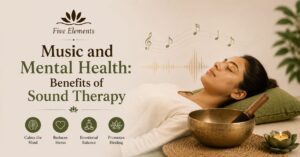
The therapeutic use of sound is based around two concepts: resonance and entrainment. Resonance is what causes a tuning fork to start vibrating when you hit another fork with the same frequency right next to it (without them ever touching). Entrainment is the process by which an external pulse (think: sustained note from a Tibetan singing bowl) can slowly begin to influence the body’s own rhythmic processes like heart rate and breathing, encouraging them to decelerate. Factor in the element of focused intention, as well as the space itself (dim lights! ritual! presence of another human! ), and you have a recipe for transformation in as little as five to ten minutes.
vs. Gongs: Different Instruments, Different Effects
Not all sound healing tools work the same way.
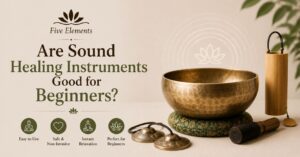
- Singing bowls produce a sustained, layered tone with rich overtones, whether struck with a mallet or “sung” by rubbing the rim. Their sound tends to feel steady and grounding — ideal for meditation, breathwork, and building a sense of stability. Because bowls vary in size, metal composition, and thickness, no two bowls (or bowl players) sound quite the same, which is part of what makes each session unique.
- Gongs, on the other hand, are bigger, bolder, and less predictable. They cover a much wider frequency range, with powerful low-end vibration that can feel like a wave moving through the room and through you. Where bowls tend to anchor a session, gongs are often used to deepen it, creating an immersive, sometimes emotionally releasing experience. Many practitioners combine both: bowls to open and stabilize a session, and gongs to build depth and intensity before a slow, gentle close.
What the Research Actually Shows
Sound therapy practice has crossed into the realm of published scientific research as well, and the results so far are promising. Early studies have associated singing bowl and gong meditation with objective reductions in subjective stress and anxiety levels, better mood, and indicators of parasympathetic nervous system activity, which is what happens when we relax. EEG measurements have demonstrated altered brainwave activity during singing bowl exposure, and HRV (heart rate variability) has been shown to improve after singing bowl meditations.
Beyond stress relief, researchers have explored sound therapy’s supportive role in several other areas:
- Sleep — pre-sleep sound sessions have been linked to reduced subjective sleepiness and easier wind-down, particularly when stress is a factor in poor sleep.
- Pain and rehabilitation — while sound doesn’t remove the source of pain, a more relaxed nervous system often means pain is experienced as less intense, which can support recovery.
- Older adults — low-impact, seated or lying-down sessions have shown promising reductions in anxiety and depressive symptoms among elderly participants, with fewer downsides than many pharmacological options.
- Neurological conditions — early research on Parkinson’s disease and other neurological symptoms suggests sound-based relaxation may ease anxiety, tension, and low mood, offering meaningful comfort even though it isn’t a treatment for the underlying condition.
- Hospital and cancer care settings — calming sound interventions have been associated with lower reported anxiety and improved emotional well-being in patients undergoing stressful medical procedures or treatment.
It’s also fair to be honest about limitations. Research is frequently conducted on small groups of people. Session lengths and styles vary. A lot of what’s being measured is subjective; how “calmer” or “more at peace” you feel, for example. Sound therapy isn’t magic, and it doesn’t take the place of medical or mental health treatment. But what we do know is that it can be used as a complementary tool that may support you as you manage stress, emotions, and overall well-being.
Why It Works, Even If You Can’t Explain It
Ask someone why a sound bath helped them and they probably won’t describe it in clinical terms. They’ll say they felt lighter, quieter, more present. Experts cite a handful of likely explanations, which work in tandem: pulling your attention away from anxious thoughts and placing it on one steady vibration; calming your nervous system so it shifts out of “fight or flight” mode; and, for many people, experiencing an actual release of emotional tension, a way of working through stressors nonverbally that have been bogged down in the body.
All of this can happen without a mantra, a belief system, or any previous meditation experience. You just need to lie down and breathe, and allow the sound to do what it’s always done for humans of every culture and age: remind your body how to rest.
A Practice Worth Making Space For
Whether you’re coming to sound healing wondering “what is this?” because of chronic stress, insomnia, or just because you know you need to slow down… the invitation is the same. Come, relax, and listen.
We see it session after session at Five Elements. People arrive stressed and tight. They leave softer. Relaxed. More connected to their bodies.
Sound healing isn’t going to fix everything that’s going on in your life. But as a simple, easy way to bring your nervous system back into balance and reconnect with the feeling of stillness, it’s becoming a regular practice for people all over the world, both in ancient healing traditions and in modern integrative medicine.
Want to try it for yourself? Check out our sound healing offerings and book a spot that works for you.